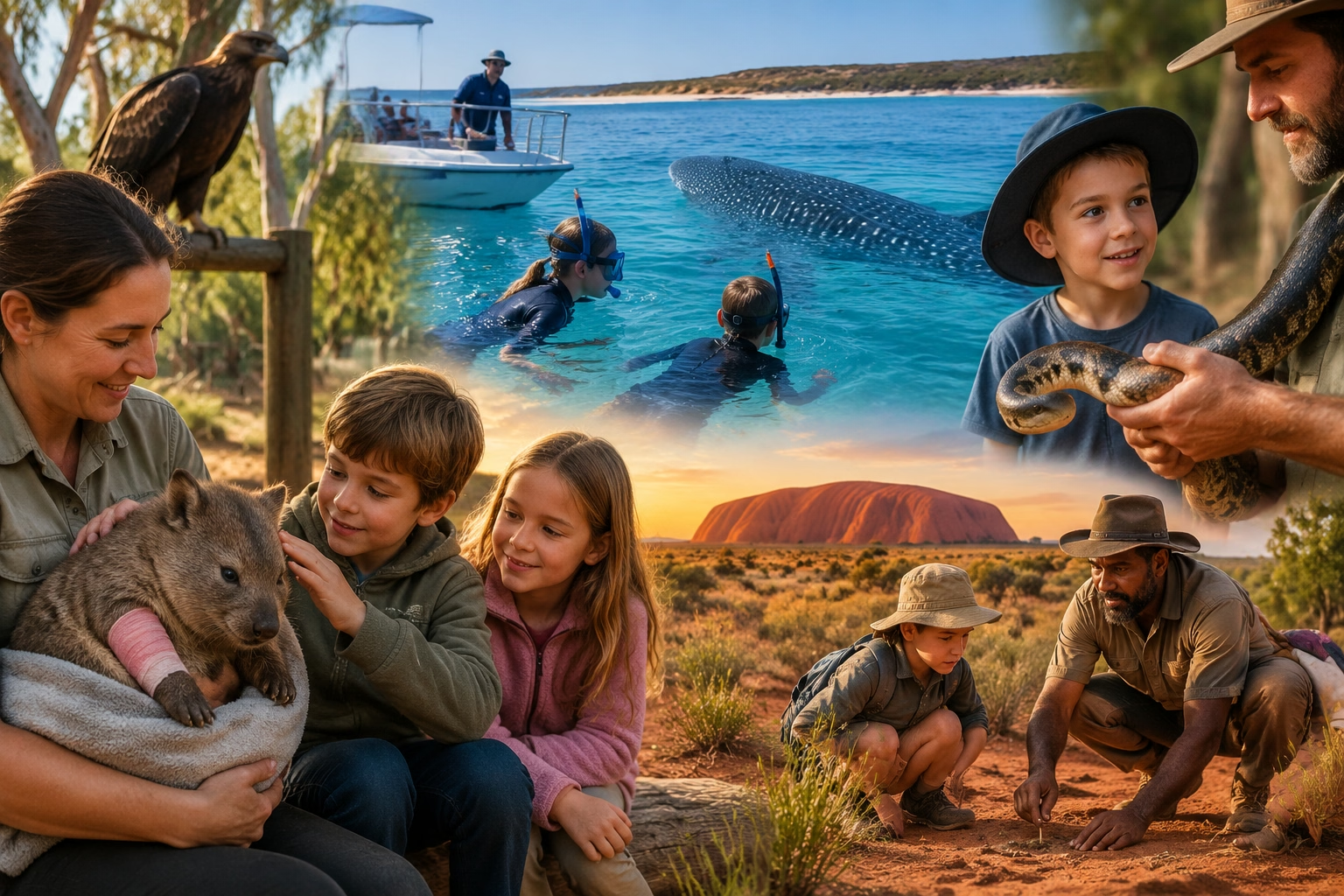
Australian family holidays have evolved significantly. While the allure of sun-soaked beaches remains, a growing demographic of parents is seeking “edutainment”—experiences where cognitive development and adrenaline intertwine. Australia’s unique geographical isolation has birthed ecosystems and cultural histories found nowhere else on Earth, making it the ultimate destination for a living classroom.
The Urban Jungle as a Science Lab
You don’t need to venture into the Outback to ignite a child’s scientific curiosity. Sydney’s Royal Botanic Garden offers specialized “Aboriginal Bush Tucker” tours where children learn about native flora used by the Gadigal people for food and medicine. It’s a tactile history lesson that contrasts sharply with textbook learning.
Further south, Melbourne positions itself as a hub for STEAM (Science, Technology, Engineering, Arts, Math) education. Scienceworks, located in Spotswood, is not a traditional museum where children are told to “look, don’t touch.” Here, touching is mandatory. The “Air Playground” and “Sportsworks” exhibits teach physics through motion and play, demonstrating principles of aerodynamics and biomechanics in ways that resonate with kinetic learners.
Marine Biology on the Reef
For older children, the Great Barrier Reef offers a sobering yet beautiful classroom. Leading operators, such as those certified by the Great Barrier Reef Marine Park Authority, run “Master Reef Guide” programs. These are not passive glass-bottom boat tours. Teenagers can participate in citizen science projects, assisting marine biologists with coral health surveys and water quality testing. This hands-on involvement transforms tourists into conservationists.
According to data from the Australian Government’s Reef Authority, educational tourism significantly boosts visitor satisfaction and environmental awareness. These programs allow children to understand the fragility of the ecosystem while being part of the solution, a powerful combination for personal growth.
History Etched in Stone
The Northern Territory’s Kakadu National Park offers a profound educational journey. The park is home to some of the world’s oldest rock art. Guided by Indigenous rangers, families can decode the stories painted on the escarpments at Ubirr. Children learn that history in Australia is not confined to buildings; it is written on the land itself.
Unlike the structured curricula of schools, travel education in Australia is fluid. It adapts to the child’s pace, allowing them to ask “why” until they are satisfied. For families looking to broaden their children’s worldview, the country offers a curriculum that covers ecology, geology, and anthropology, all without a single pop quiz.