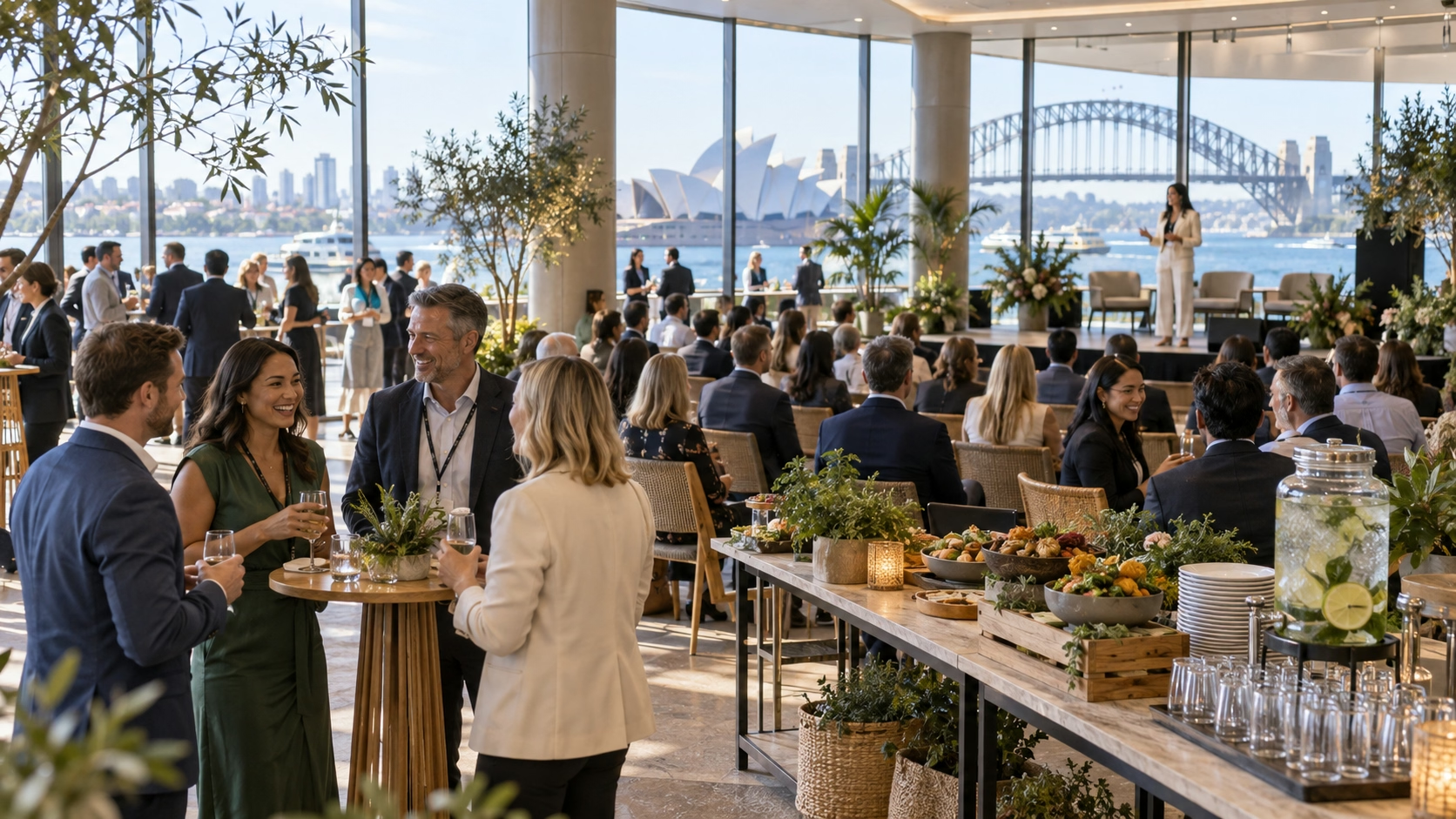

Australia’s event promotion and management services industry has staged a remarkable comeback, with revenue expected to reach $13.1 billion in 2025-26, representing an annualised growth of 10.4% over five years. This rebound exceeds pre-pandemic levels, driven by a surge in conferences, exhibitions, live entertainment, and major sporting events. The industry now employs nearly 50,000 people across 13,517 businesses, with New South Wales and Victoria serving as the heartland, housing more than two-thirds of all establishments.
Corporate events have emerged as a critical growth driver, but the landscape looks markedly different from 2019. According to the 2026 Executive PA Corporate Event Organiser Survey, executive assistants managing corporate events now handle significantly larger budgets while working to increasingly compressed timelines. The proportion of EAs managing budgets exceeding $500,000 has more than doubled from 7% to 15%, while 22% now organize events for over 300 people, up from 17% in 2019.
Yet planning windows have shrunk dramatically. Two-thirds of EAs now receive less than three months’ notice for events under 100 attendees, up from 60% in 2019. This compression has forced organizers to adopt more agile workflows and rely increasingly on external support. Convention bureau usage has nearly doubled from 13% in 2019 to 25% in 2026, while destination management company engagement has risen from 11% to 17%.
Despite the growth trajectory, cost containment has become the primary factor influencing event strategies. The Cvent Event Industry Report 2026 – Australia & New Zealand Edition (https://www.cvent.com/), which surveyed 200 senior planners, reveals that while 65% of event professionals still plan to increase their total number of events in 2026, this figure has normalised from 81% in 2025. Nearly all respondents (96%) view event expenditure as a priority, yet only 63% plan to increase their programme budgets, down from previous growth levels.
Where budgets are rising, the focus is on enhancing the event experience—stage design, AV, entertainment, and speaker quality—rather than simply scaling up. The health sector dominates the domestic business events pipeline, accounting for 37% of secured events through to 2033, with a total forward pipeline exceeding $1 billion in projected delegate spend.
The industry faces headwinds, including rising public liability insurance premiums and cost-of-living pressures affecting consumer discretionary spending. However, the fundamentals remain strong. With 91% of organizations identifying as innovators or early adopters of event technology, the sector is poised for continued transformation.