
Australia’s immunisation landscape is frequently cited as a public health success. Through a mix of stable funding, careful regulation, and coordinated delivery, the National Immunisation Program (NIP) has pushed coverage for key childhood vaccines to consistently high levels. For many vaccines, first and second dose coverage among young children often exceeds 90%, helping suppress diseases that just a few decades ago caused significant illness and death. Measles remains largely absent except for occasional importations, rubella transmission has been halted, and the school-based program has driven strong uptake of HPV vaccines.
Behind these results is a machine that runs on policy, logistics, and data. The Australian Technical Advisory Group on Immunisation (ATAGI) translates evidence into recommendations, while the Therapeutic Goods Administration (TGA) oversees vaccine safety and quality. The Australian Immunisation Register (AIR) captures doses across life stages, enabling reminder systems, catch-up planning, and population-level insights. General practitioners, community health services, Aboriginal Community Controlled Health Services, and pharmacies form a delivery mesh that reduces barriers for most people.
The school immunisation model is a standout. By bringing vaccines to adolescents where they study, Australia has normalised vaccination as a routine part of growing up. This approach has contributed to declines in HPV-related disease and supports resilience against other vaccine-preventable threats.
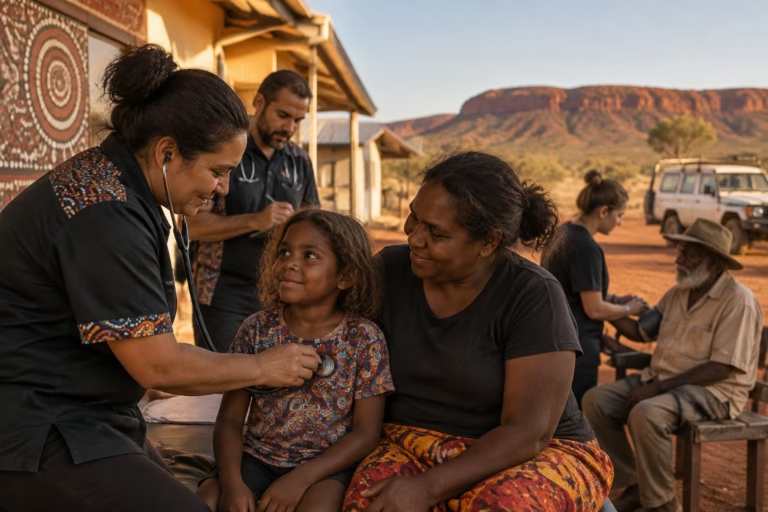
Even so, the picture is not uniform. Geographic remoteness can hinder timely vaccination, with travel distances, staff turnover, and cold-chain fragility complicating delivery. First Nations communities have made gains through community-led services, but gaps persist and require culturally safe care, flexible hours, and outreach clinics to maintain momentum. Migrants and refugees also need tailored catch-up pathways, translated materials, and clear guidance on entitlements.
Vaccine hesitancy remains another pressure point. Although most Australians support vaccination, misinformation can flare—especially online—eroding trust. The remedy involves transparent risk communication, consistent messaging across jurisdictions, and partnerships with community leaders who can speak to local concerns. Health professionals need time and tools to address questions empathetically without disrupting clinic flow.
Logistics are never set-and-forget. Maintaining the cold chain in harsh climates demands reliable equipment and real-time monitoring. Extreme weather events, bushfires, and floods can disrupt supply routes, highlighting the importance of contingency stocks and flexible distribution plans. At the same time, evolving pathogens—such as pertussis cycles and influenza drift—require nimble updates to schedules and procurement.
The COVID-19 era stress-tested systems and accelerated innovations. Pharmacies expanded their role, digital booking and reminder tools improved access, and safety monitoring strengthened through active surveillance. Those advances can be embedded into routine programs: more convenient options for adults, better visibility of coverage gaps, and scalable surge capacity for future threats.
Looking ahead, Australia’s path involves protecting high coverage while closing equity gaps. Investment in community-controlled services, culturally tailored campaigns, and mobile clinics can push hard-to-reach coverage higher. Continuous safety surveillance and transparent reporting build confidence. With sustained coordination, Australia can keep vaccine-preventable diseases rare while ensuring every community shares in the benefits.