
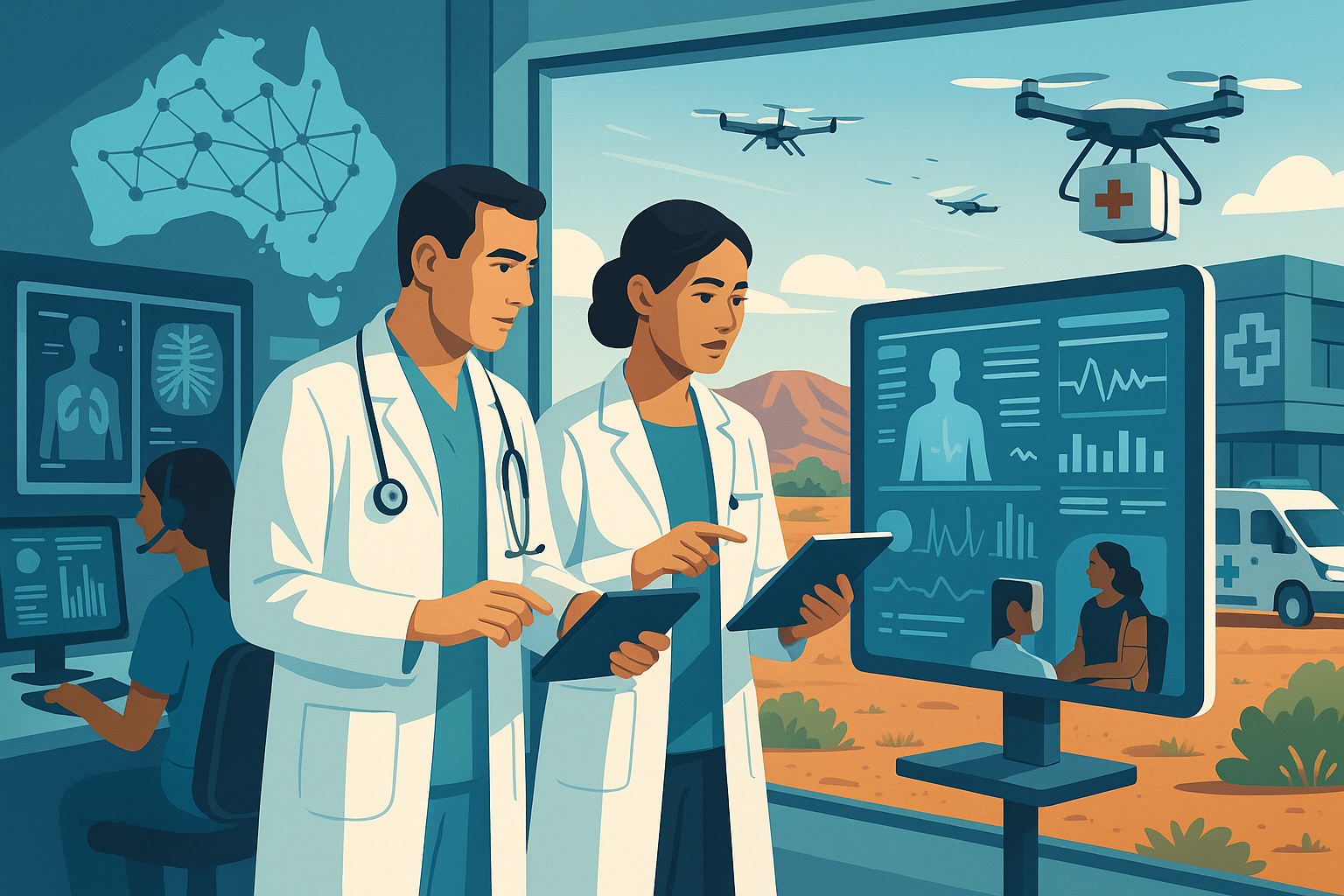
Australia’s health system has embraced a steady, pragmatic wave of digital innovation, guided by a dual focus: better outcomes and fairer access. At the center sits the Australian Digital Health Agency’s My Health Record, a national platform that aggregates key clinical information so clinicians and patients can make faster, safer decisions. The utility of interoperable records expands when paired with standards such as HL7 FHIR, enabling software systems—practice management tools, pathology labs, and hospital EMRs—to “speak” to each other across jurisdictions.
Telehealth is now part of everyday care rather than a niche service. Medicare-subsidised video and phone consults have broadened access, particularly in rural and remote regions where clinician shortages are common. Virtual emergency departments in states like Queensland and Victoria demonstrate how triage, observation, and escalation can occur online, reserving physical beds for those who truly need them. Remote patient monitoring for chronic disease—home spirometry for COPD, connected glucometers for diabetes, and smart blood pressure cuffs—supports proactive management and reduces avoidable admissions.
Prescription digitisation is another quiet revolution. ePrescriptions and the Active Script List streamline medication access, improve adherence, and cut down on dispensing errors. Electronic medication management within hospitals provides closed-loop safety from charting to administration, helping teams catch dose anomalies and interactions before they cause harm.
Artificial intelligence, though carefully regulated by the Therapeutic Goods Administration (TGA), is gaining traction in radiology and screening. Machine learning aids detection of breast lesions and lung nodules, accelerates reporting queues, and reduces fatigue-related misses. Clinical decision support tools now flag sepsis risk or deteriorating vitals in near real time, giving teams a crucial head start.
Australia’s robust research ecosystem underpins these advances. The Medical Research Future Fund (MRFF), CSIRO collaborations, and sector connectors like MTPConnect help pull innovations from lab to bedside. Genomics is a standout: national alliances such as Australian Genomics and Melbourne Genomics integrate sequencing into oncology, rare disease diagnosis, and pharmacogenomics, shortening diagnostic odysseys and tailoring therapies.
Equity remains a north star. Telehealth hubs, point-of-care testing, and culturally informed digital programs can reduce gaps faced by First Nations peoples and isolated communities. Logistics innovation—from temperature-stable supply chains to drone-enabled deliveries piloted by Australian firms—can keep vaccines, pathology samples, and urgent medicines moving to the last mile.
Yet challenges persist. Interoperability remains patchy, cybersecurity demands constant vigilance, and clinicians need protected time to adopt new workflows. Procurement and evaluation must reward outcomes, not just features. Above all, human factors matter: co-design with patients and clinicians is the difference between elegant tech and everyday value.
Australia’s direction is clear: a connected, data-driven system that anticipates risk, personalises care, and keeps people well at home. The promise isn’t to replace clinicians, but to free them—to listen longer, decide faster, and focus on what only humans can do.