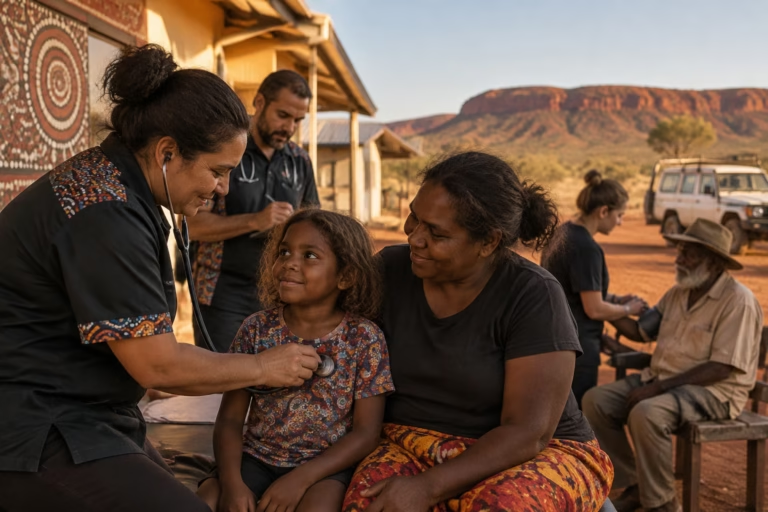
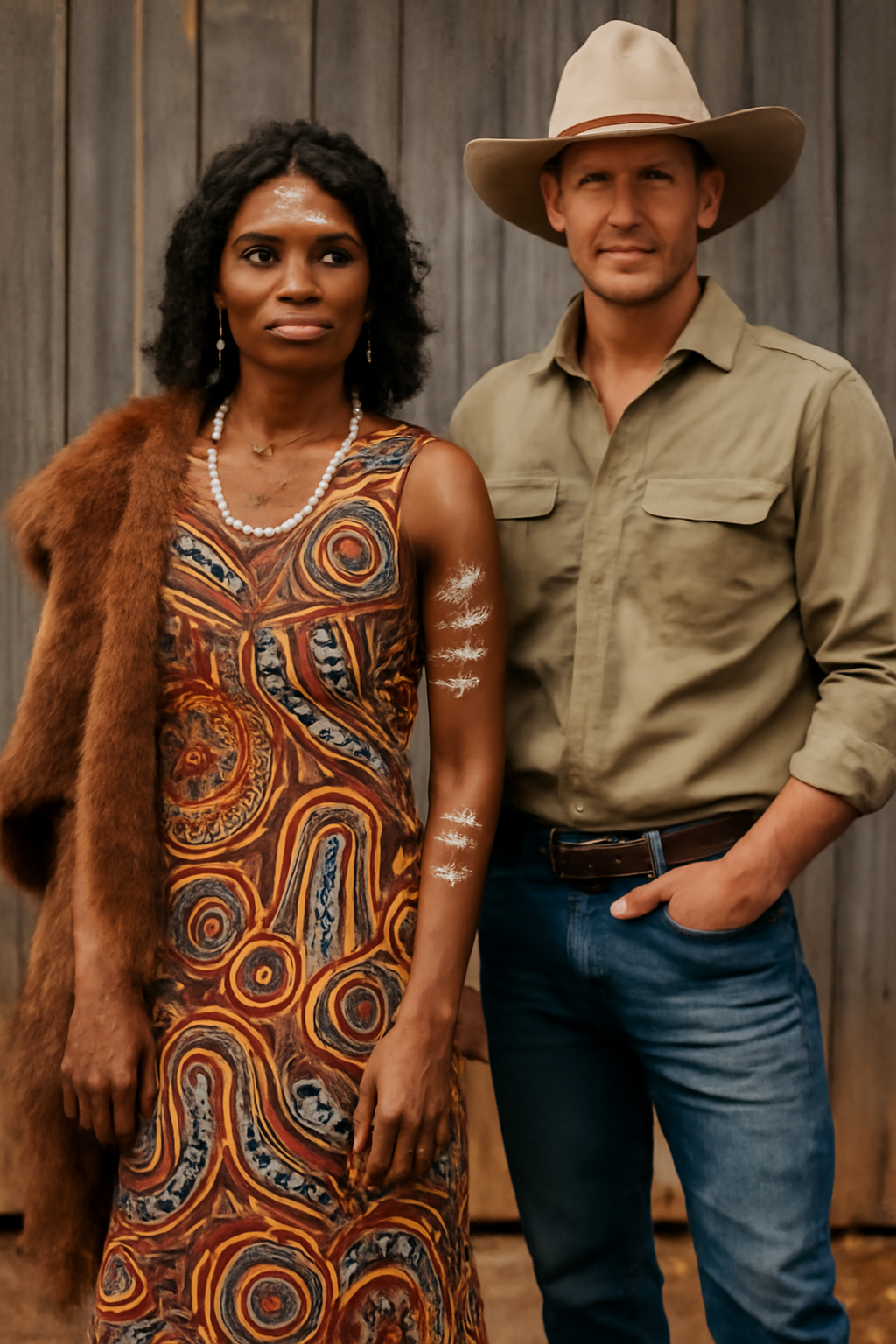
Australia is a country known for its rich cultural diversity, and this is reflected in the traditional clothing worn by its people. The evolution of Australian fashion has been shaped by indigenous history, colonial influences, and modern trends. Traditional clothing in Australia, while not as prevalent today, plays an important role in preserving and honoring the nation’s heritage.
Indigenous Australian Clothing
The earliest form of traditional clothing in Australia is linked to its Indigenous people, who have lived on the continent for over 65,000 years. Indigenous Australians, who belong to over 250 distinct language groups, have diverse clothing practices, which were typically adapted to the climate and environment they lived in. In the warmer northern regions, minimal clothing was worn. For instance, Aboriginal men and women often wore garments made from plant fibers, animal skins, and shells. In cooler southern regions, clothing was more elaborate, made from animal furs, including kangaroo and emu skins.
Body adornment was also significant in many Aboriginal and Torres Strait Islander cultures. Body painting, feathered headdresses, and jewelry made from bones, seeds, and shells were common forms of cultural expression. These decorative elements were not just aesthetic; they conveyed stories, ceremonial importance, and a deep connection to the land.
Colonial and European Influence
With the arrival of European settlers in the late 18th century, the traditional clothing of Indigenous Australians began to shift, and Western fashion started to play a significant role. The British settlers brought with them their own clothing styles, which were adapted to the Australian climate. The early settlers wore woolen garments, which were not always practical for the Australian heat. Over time, Australians adapted these styles, and by the 19th century, local materials, including wool from Australian sheep, began to influence the creation of more suitable clothing for the harsh Australian environment.
The ‘Aussie outback’ style, featuring wide-brimmed hats, rugged boots, and long-sleeve shirts, became iconic in rural and agricultural regions. This practical, functional clothing style became associated with the image of the Australian bushman, embodying the country’s pioneering spirit and its connection to the land.
Contemporary Fashion and the Fusion of Traditions
In contemporary Australia, traditional clothing is often worn during ceremonial events or festivals to celebrate Indigenous heritage. Events such as NAIDOC Week (National Aboriginal and Islanders Day Observance Committee) and other cultural gatherings feature traditional dances, music, and clothing as a way to honor the past.
Modern Australians also incorporate Indigenous design elements into everyday fashion, leading to a fusion of traditional Aboriginal art and contemporary apparel. Designers such as Lisa M. O’Donnell, who incorporates Aboriginal prints and motifs into her fashion lines, showcase the ongoing influence of Indigenous culture on Australia’s modern clothing scene. The clothing styles seen today are often a blend of practicality, artistic expression, and a celebration of cultural heritage.
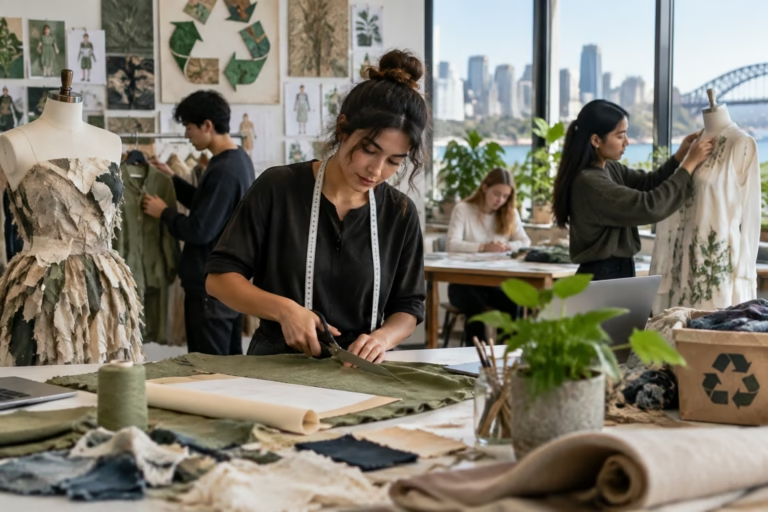
Additionally, there is a growing movement towards sustainability, and many Australian fashion designers now look to traditional techniques and materials for inspiration. Items such as woven baskets, indigenous prints, and handcrafted textiles are being incorporated into contemporary designs, promoting environmental consciousness and a return to more authentic, heritage-rich ways of dressing.
Final Thoughts
Australian traditional clothing reflects the complex history and cultural diversity of the country. While Indigenous clothing traditions remain central to the identity of Aboriginal and Torres Strait Islander peoples, contemporary Australians continue to honor and integrate these traditions into modern fashion. The evolution of clothing in Australia is a testament to the country’s ability to blend old with new, acknowledging the past while embracing innovation and diversity in fashion.