Australia’s video game industry has shifted from a small, experimental scene into a mature creative sector with global reach. Its development is tied to changes in technology, distribution, and audience behavior—especially the way games now sit alongside film, music, and streaming as everyday entertainment.
From hobbyist roots to global storefronts
Early Australian game development grew out of home-computer culture, local programming communities, and small studios that built titles for PC and console publishers. That model was often fragile: projects depended on external contracts, and talented developers frequently moved overseas when local budgets tightened. Over time, cheaper tools, online learning, and digital marketplaces reduced the barrier to entry. Platforms like Steam, console digital stores, and mobile app ecosystems allowed Australian creators to reach international players without needing a massive publisher relationship from day one.
The rise of the indie identity
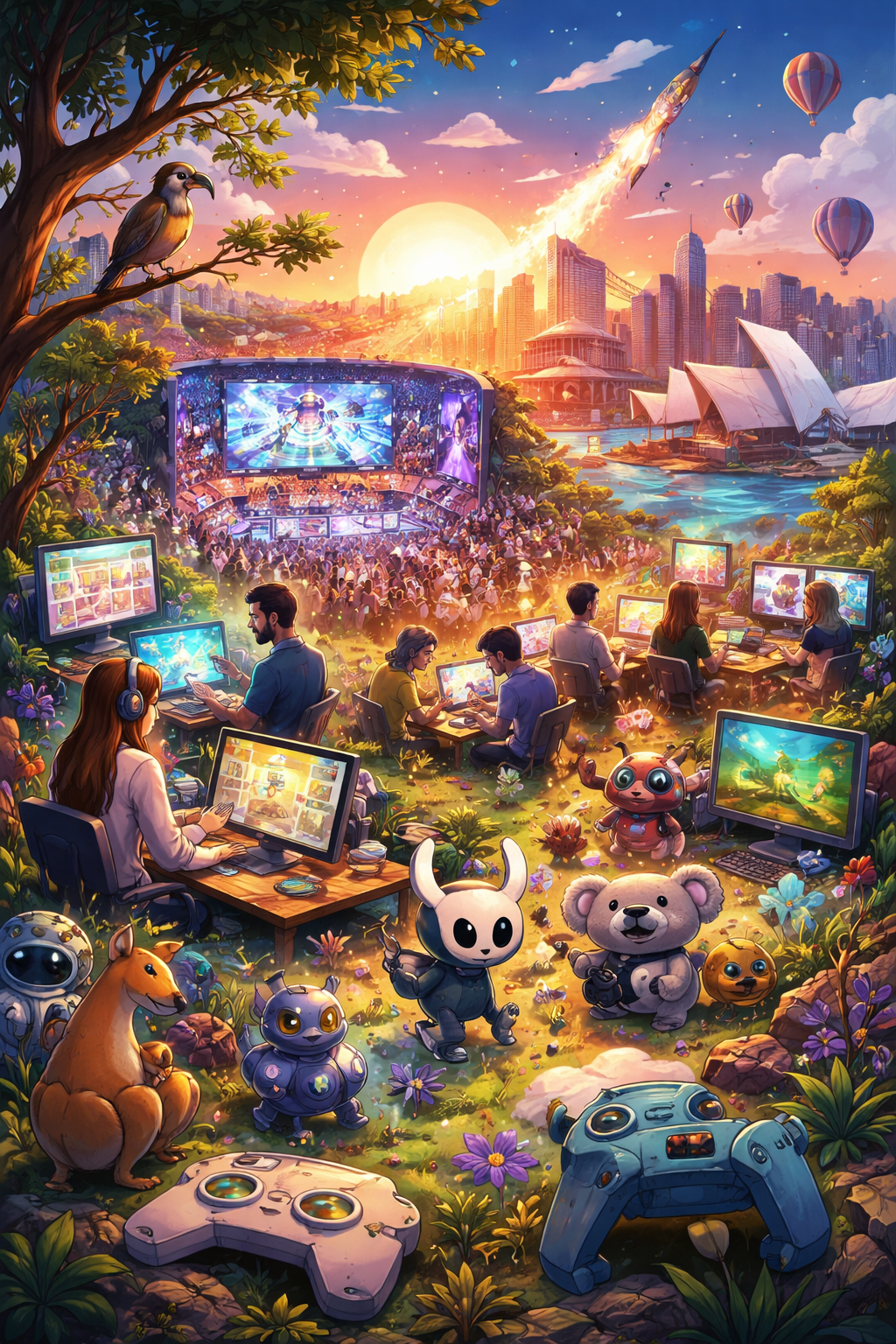
A major driver of Australia’s modern reputation is its indie success. Smaller teams proved that strong art direction, clever mechanics, and distinctive storytelling could compete worldwide. Games such as Hollow Knight helped spotlight how Australian studios could build long-tail hits through updates, community engagement, and word-of-mouth. This success shaped a recognizable “Australian indie” identity: inventive, design-forward, and willing to take creative risks.
A mixed ecosystem: indie studios, AAA support, and service work
Australia’s industry now includes a range of business models. Some teams make premium indie releases; others operate as mobile-first companies; and some act as support studios contributing art, QA, engineering, or co-development to major international publishers. This mix matters for stability: service work can keep people employed between original releases, while original IP builds long-term value and cultural visibility.
Government support, education, and talent pipelines
Public funding and screen-agency style programs have increasingly treated games as a cultural product, not just software. States and territories have offered grants, location-based incentives, and skills initiatives, while universities and vocational programs produce designers, artists, and programmers. Recent federal policy has also moved toward tax incentives for eligible game development, signaling that games are part of the broader creative economy. For studios, these supports can reduce risk, encourage hiring, and help teams stay local rather than relocating.
How the industry reshapes entertainment habits
For audiences, the impact is clear: games have become a default leisure option, not a niche hobby. Australians now watch game streams, follow esports, share mods, and treat game launches like major media events. Interactive entertainment also changes the “shape” of leisure time—games can be social, competitive, relaxing, narrative-driven, or endlessly replayable. This flexibility makes them especially powerful in a world of fragmented attention and subscription-based media.
Culture, representation, and community
Australian-made games contribute to cultural storytelling by reflecting local humor, landscapes, and voices, and by experimenting with themes that traditional media may avoid. Community events—game jams, conventions, esports tournaments, and developer meetups—build social connections and create pathways for new talent. At the same time, the sector faces challenges: funding volatility, the risk of crunch, gaps in diversity, and the difficulty of scaling from a hit game into a sustainable studio.
Looking ahead, cloud gaming, VR/AR experiences, and ethical uses of AI tools may reshape production and play. Australia’s advantage will likely come from combining technical skill with bold creative direction—making games that travel globally while still feeling unmistakably authored.