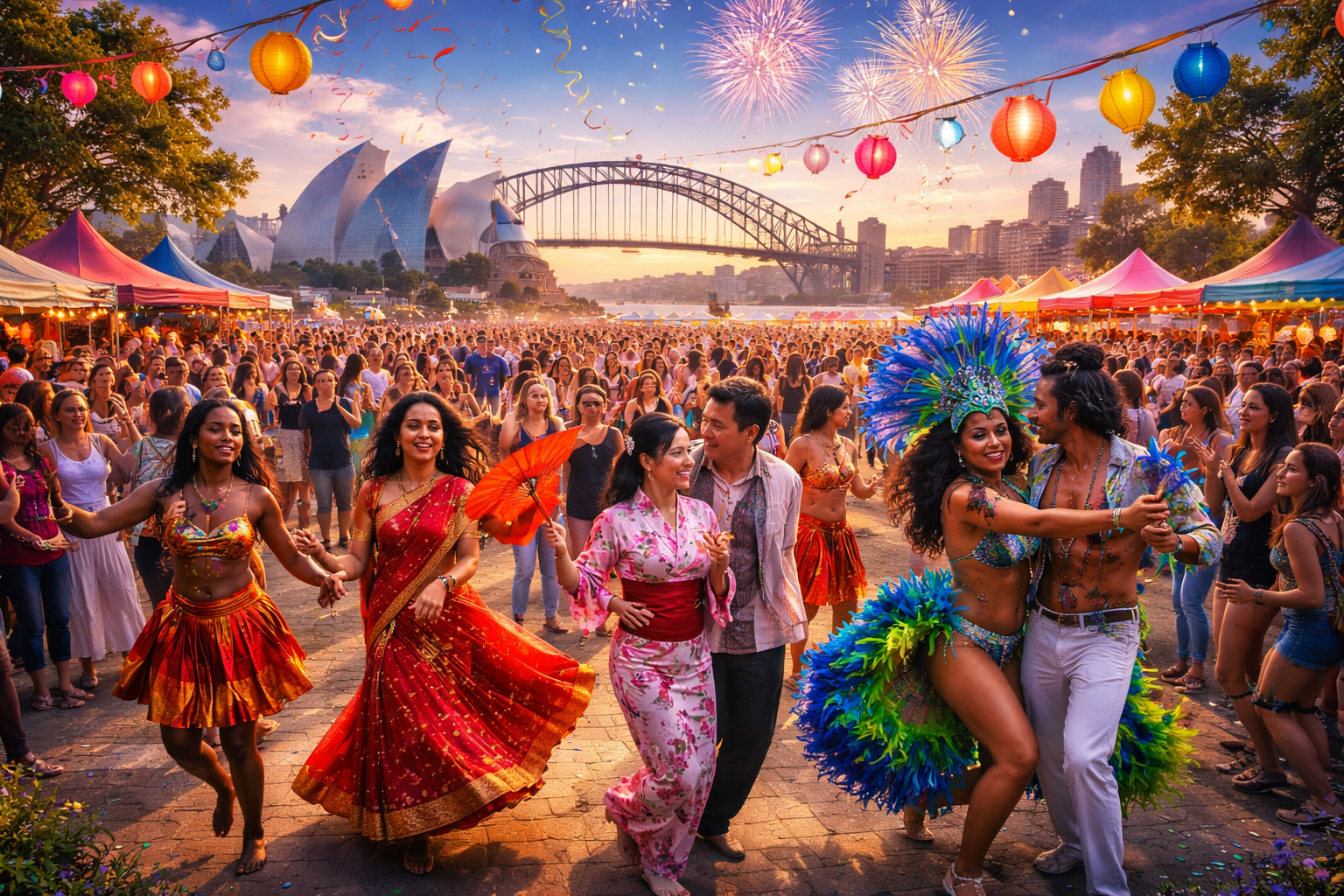
Australia, known for its multicultural society, is home to a rich tapestry of cultures, each contributing to the country’s vibrant identity. One of the most spectacular ways this diversity is showcased is through its cultural festivals, which take place across the nation’s cities year-round. These events not only celebrate the diverse backgrounds of the people who call Australia home but also highlight the unique fusion of traditions, customs, and creative expressions that have come to define the country.
In major cities like Sydney, Melbourne, and Brisbane, the calendar is packed with festivals that bring together people from different ethnicities, religions, and histories. The celebrations range from indigenous events that honor Australia’s First Nations people to festivals that spotlight the cultural traditions of immigrant communities. For example, the Sydney Festival, held every January, is a prime example of how the arts, music, and performances from various cultural backgrounds can converge in one of the country’s largest cities. With performances by both local and international artists, it showcases everything from contemporary dance to classical music, reflecting Australia’s diverse cultural landscape.
Similarly, Melbourne’s iconic Moomba Festival, which takes place in March, is a celebration of Australian culture at large but also integrates aspects of its multiculturalism. The festival includes a variety of cultural performances, from traditional folk dances to modern music concerts, and also features parades that highlight the many different communities living in the city. Moomba is a reminder of how Australia’s modern identity has been shaped by centuries of immigration and cultural exchange.
The city of Brisbane also hosts the Brisbane Festival, a 22-day event that brings together local, national, and international artists in a collaborative celebration of art, culture, and diversity. This event takes place in September and includes a range of performances across various venues, making it an exciting fusion of artistic expression from around the globe. It’s a beautiful example of how Australia’s cultural festivals not only embrace their local population but also provide a platform for global voices.
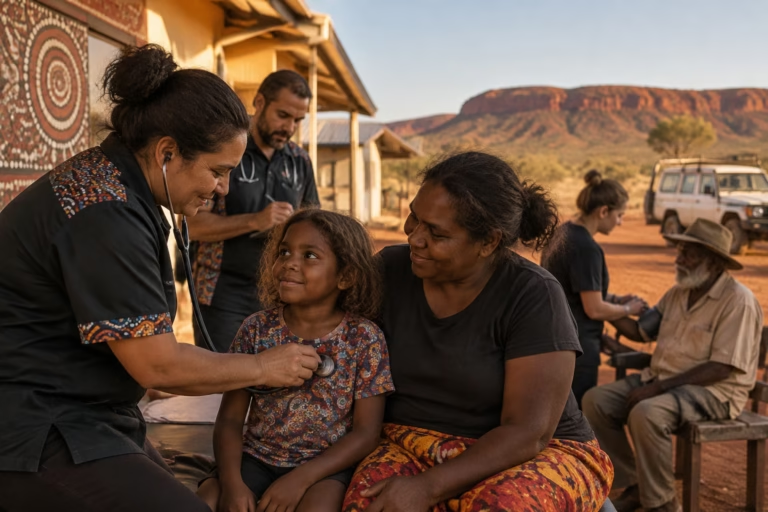
Australia’s cultural festivals are not just about performances; they often serve as an avenue for deeper exploration of the nation’s history. The National Aboriginal and Torres Strait Islander Art Awards, for example, is held in Darwin and is an essential part of Australia’s cultural calendar. This festival honors the arts of Australia’s Indigenous people, creating an opportunity for reflection on the country’s rich Aboriginal history and contemporary cultural contributions.
Across the country, cultural festivals act as both a celebration of the past and a bridge to the future. They create spaces where people from all walks of life can come together, share their experiences, and engage in dialogue about the diverse cultural fabric of the nation. For the Australian public, these festivals are much more than events—they are opportunities to learn, appreciate, and, most importantly, celebrate the rich heritage of their fellow Australians.
By embracing diversity through cultural festivals, Australia sets an example for other nations on how to celebrate multiculturalism. These events are more than just entertainment; they are powerful expressions of identity, inclusion, and understanding. Through the lens of music, art, and performance, Australia demonstrates that diversity is not something to be tolerated, but something to be proudly celebrated.