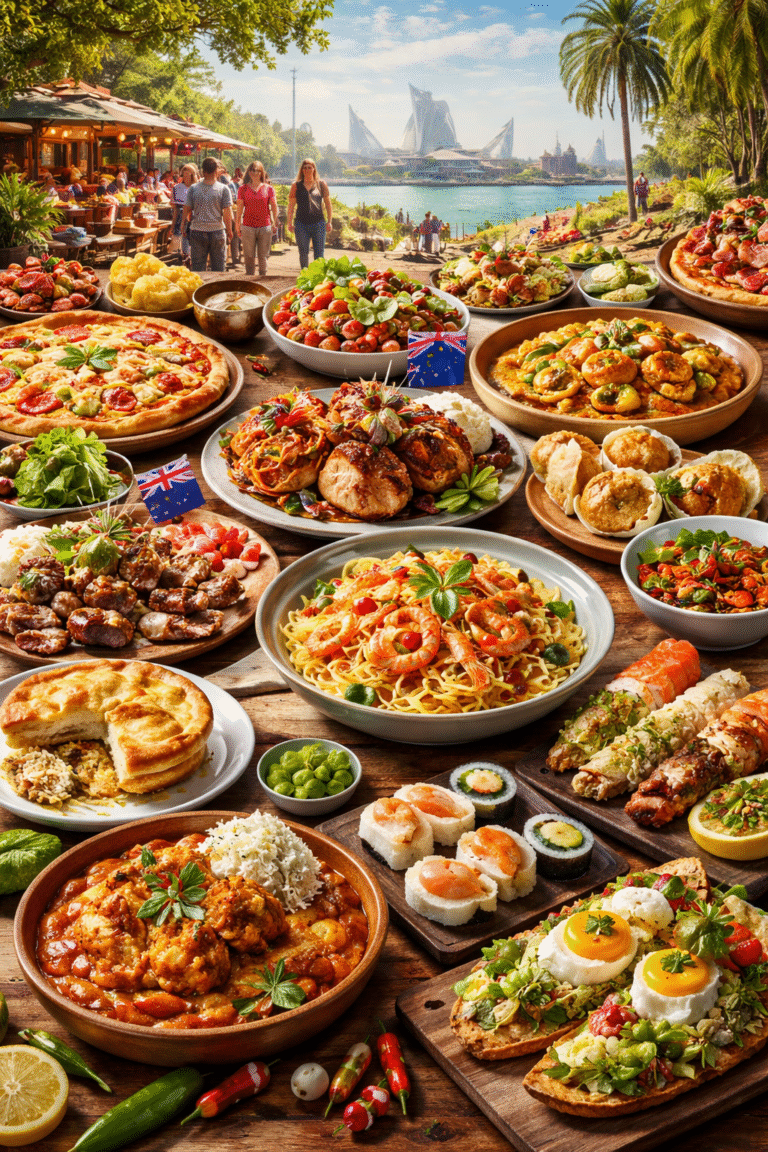



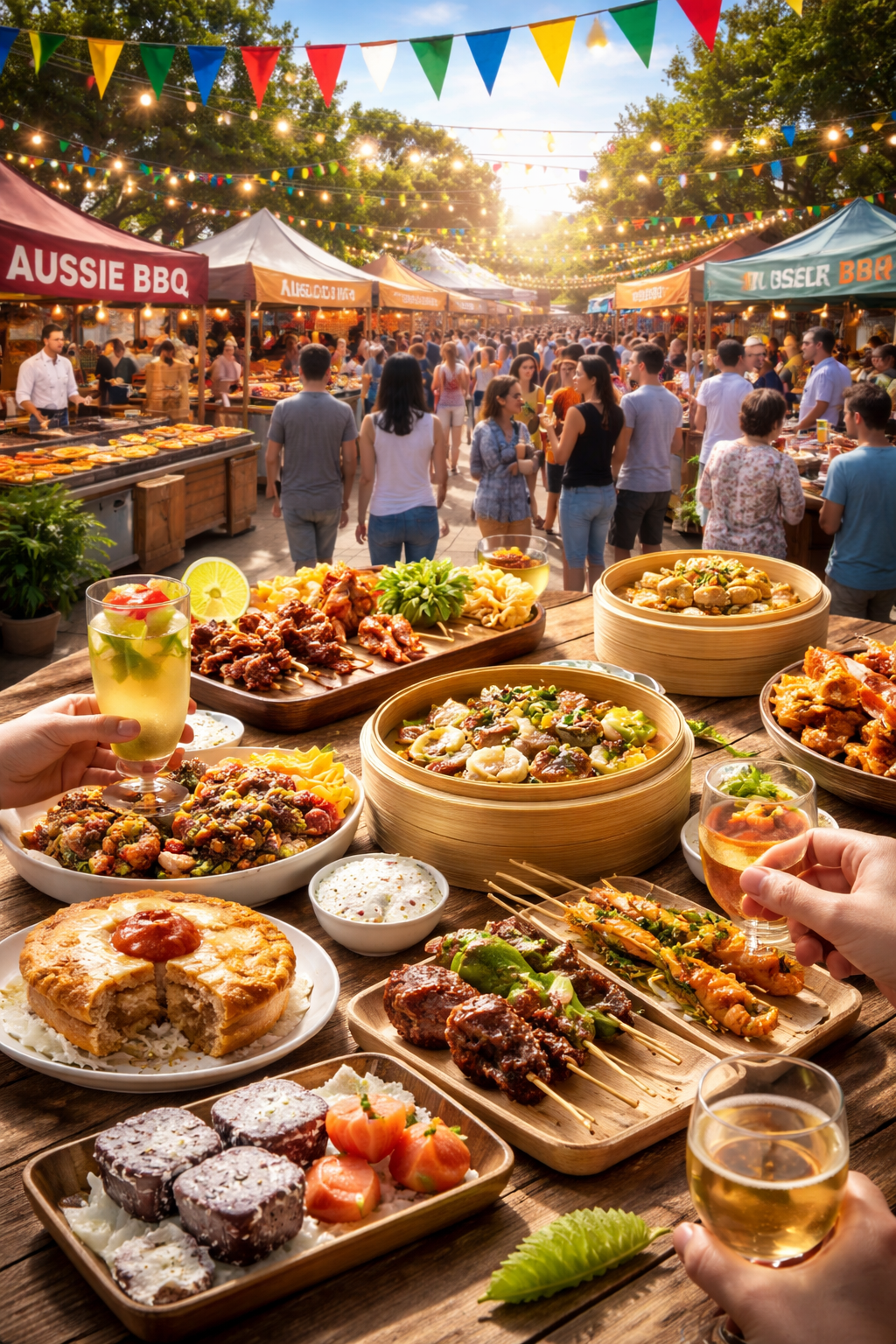
Australian festivals are more than music stages and parade routes—they’re pop-up dining rooms where the country’s layered identity becomes edible. At major cultural events, you can taste Indigenous ingredients, British roots, and the imprint of migration from Asia, Europe, the Middle East, and the Pacific. The result is a festival food scene that feels familiar in one bite and surprising in the next.
A helpful way to understand “Australian festival cuisine” is to see it as a mix of classic comfort food, modern café-style creativity, and regional produce showcased at street level. You might start with iconic staples: a meat pie with flaky pastry, sausage sizzles that smell like weekend fundraisers, or a lamington dusted with coconut. These aren’t just snacks; they’re culinary shorthand for everyday Australia—simple, filling, and proudly unpretentious.
Festivals, however, push these basics into more playful territory. Food trucks and temporary stalls often remix familiar favorites: pies filled with slow-cooked lamb and native herbs, chips topped with bush-spice seasoning, or burgers built around local seafood. Even the humble “snag” can be upgraded with artisanal sausages, caramelized onions, and sauces inspired by Southeast Asia.
One of the strongest features of Australian festival food is its multicultural rhythm. Because Australia’s cities are deeply diverse, cultural celebrations naturally bring specific cuisines into the spotlight. At events celebrating Greek, Italian, Lebanese, Vietnamese, Chinese, Indian, and Pacific Islander communities, you’ll find dishes presented with pride and adapted for festival crowds—quick to serve, easy to eat standing up, and packed with bold flavor. This is where you taste how “Australian” food keeps evolving: not by replacing older traditions, but by absorbing new ones.
Drinks are a major part of the story too. Australia’s festival menus frequently highlight local wine, craft beer, and specialty coffee, reflecting the country’s strong beverage culture. In wine-focused regions, tasting booths may pour crisp Riesling, robust Shiraz, or sparkling styles, often paired with local cheeses and charcuterie. Elsewhere, festival bars spotlight small-batch gins with native botanicals, or pale ales brewed with tropical hops. Coffee carts, meanwhile, operate like mini cafés—flat whites and long blacks served fast, because caffeine is practically a national accessory.
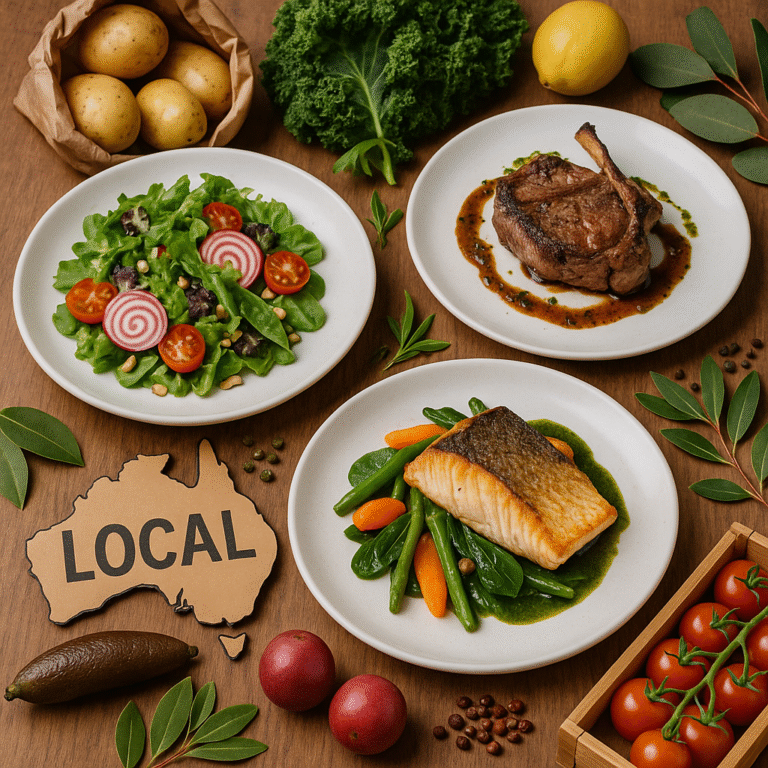
For a deeper experience, look for stalls emphasizing seasonal and regional produce. Australia’s climate swings from cool coastal zones to tropical north, and festival vendors often lean into that variety: oysters and scallops near the sea, mangoes and barramundi in warmer states, truffles and cool-climate berries in southern regions. Many events also feature cooking demonstrations where chefs explain techniques and ingredients, turning a meal into a short masterclass.
If you want to eat strategically at a festival, pace matters. Start with smaller items to sample more: share plates, skewers, dumplings, or tasting cups. Balance rich foods (fried snacks, cheesy melts, sweet pastries) with something fresh—salads with citrus, grilled seafood, or fruit-based desserts. And if you’re curious about native ingredients such as lemon myrtle, wattleseed, or finger lime, festivals are one of the easiest places to try them in approachable formats like sauces, sweets, or marinades.
In the end, festival dining in Australia works like a guided tour—one where the map is made of aromas, and the itinerary changes with every community celebration.