


Australia’s dining scene excels at contrasts—iconic fine-dining rooms where artistry reigns and breezy cafés where the flat white is treated like a sacred ritual. In Melbourne, Attica has long been a bellwether for modern Australian cuisine. Ben Shewry’s kitchen explores native ingredients—think bunya nuts, kangaroo, and wild herbs—while elevating humble textures with precision and care. In Sydney, Quay blends harbor views with Peter Gilmore’s produce-led finesse; its longform menus carry an unmistakable Australian identity rooted in seasonal vegetables and pristine seafood. Head an hour and a half from Melbourne and Brae in Birregurra turns farm-to-table into an immersive experience with on-site gardens and a quiet rural rhythm.
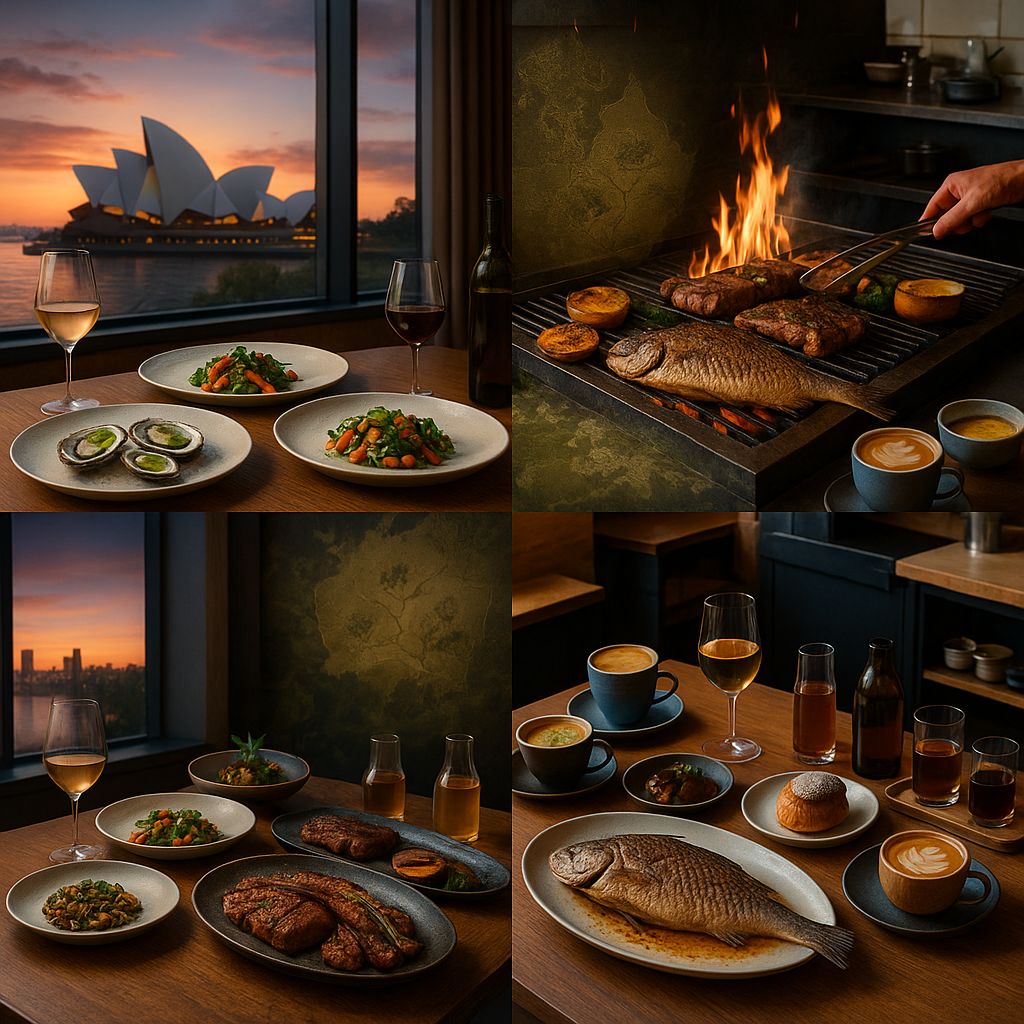
Fine dining in Australia isn’t just ceremony; it’s curiosity. Vue de Monde in Melbourne’s Rialto towers transforms local produce into sculptural tasting courses with confident restraint. Firedoor in Sydney uses no gas—only live flames—to deliver dishes with a primal, smoke-wreathed purity; steaks share space with flame-kissed vegetables and line-caught fish. Seafood gets a radical rethink at Saint Peter, where nose-to-tail fish cookery shows off aging, butchery, and cuts most diners rarely see. In Brisbane, Restaurant Dan Arnold threads French technique through Queensland’s bright produce, and in Perth, Wildflower explores Indigenous ingredients with contemporary elegance.
Café culture is a parallel universe of equal seriousness, just with more sunlight. Melbourne remains the reference point: Proud Mary, Seven Seeds, and Industry Beans champion meticulous sourcing and roast profiles that make espresso and filter equally compelling. In Sydney, Single O and Reuben Hills set the pace on brew methods, while Exchange Specialty Coffee in Adelaide and Mary Street Bakery in Perth keep regional scenes in lively conversation with the east coast’s standards. Expect thoughtful brunch menus—fermented crumpets, house granola with wattleseed, and seasonal pickles—paired with milk textures that would satisfy a barista’s barista.
A few practicalities help you eat better. Top-tier restaurants often require reservations weeks in advance, especially Fridays and Saturdays; set reminders when bookings open. Public holiday surcharges are common and clearly labeled. Australia’s tipping culture is low-pressure compared to the U.S., but rounding up or leaving 5–10% for exceptional service is welcomed. BYO (bring your own) licenses pop up across bistros and suburban gems; corkage varies, so check policies. Non-alcoholic pairings—ferments, teas, native botanical infusions—are now common in tasting rooms, and allergen-aware kitchens handle gluten-free or dairy-free diets deftly if flagged early.
Wine lists underscore the country’s geographic breadth: Margaret River chardonnay and cabernet, Yarra Valley pinot, Barossa shiraz, Tasmanian sparkling, and a wave of minimal-intervention producers crafting fragrant, textural whites and chillable reds. Sommeliers often nudge you toward lesser-known Australian expressions rather than defaulting to European benchmarks—and that’s the point. The best eating in Australia looks inward, translating landscape and season into texture and tone, whether you’re perched at a linen-clad table or sipping a piccolo by a sunlit window.