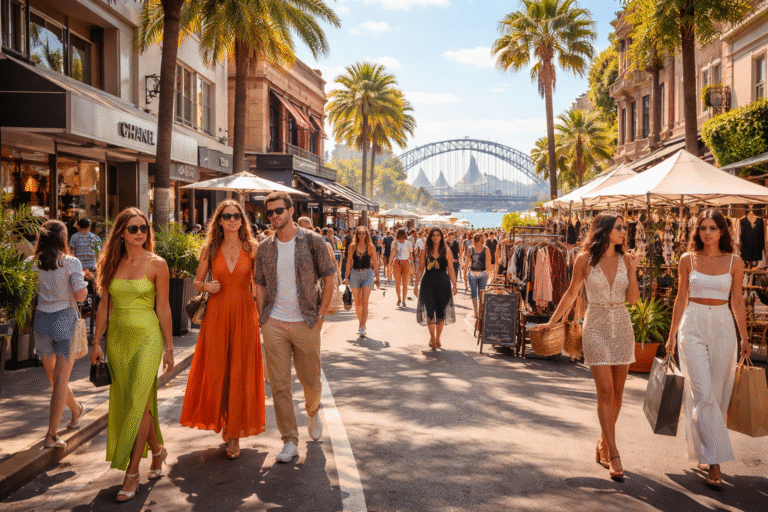



Australian streetwear is a conversation between the city and the screen, a dialogue where laneways, festivals, and social feeds all have a say. The country’s sprawling cities—Sydney’s glossy beaches, Melbourne’s labyrinth of alleys, Brisbane’s humid nightlife—provide distinct stages on which urban style evolves. Pop culture, especially music and film, acts as both amplifier and distributer, turning local looks into national signals.
The roots are hybrid. Skating culture from the 1990s fused with surf-wear legacies, while hip-hop communities established silhouettes focused on roomy cuts, graphic storytelling, and sneaker culture. Australian labels learned to translate these global cues into local dialects: light fabrics for heat, functional pockets for commuters, and the relaxed drape that suits a climate where the line between weekday and weekend is blurry.
Music scenes are key drivers. Festivals like Laneway and Splendour in the Grass operate as roving runways; what performs on stage often migrates into the crowd within a season. Drill and hip‑hop collectives in Western Sydney have become style references in their own right—mixing athletic sets, puffer vests, and bold caps with luxury accents. Indie and electronic scenes favor looser tailoring, washed denim, and archival sneakers. DJs and visual artists extend the look via merch drops that sell out in minutes, reinforcing a culture of limited runs and rapid iteration.
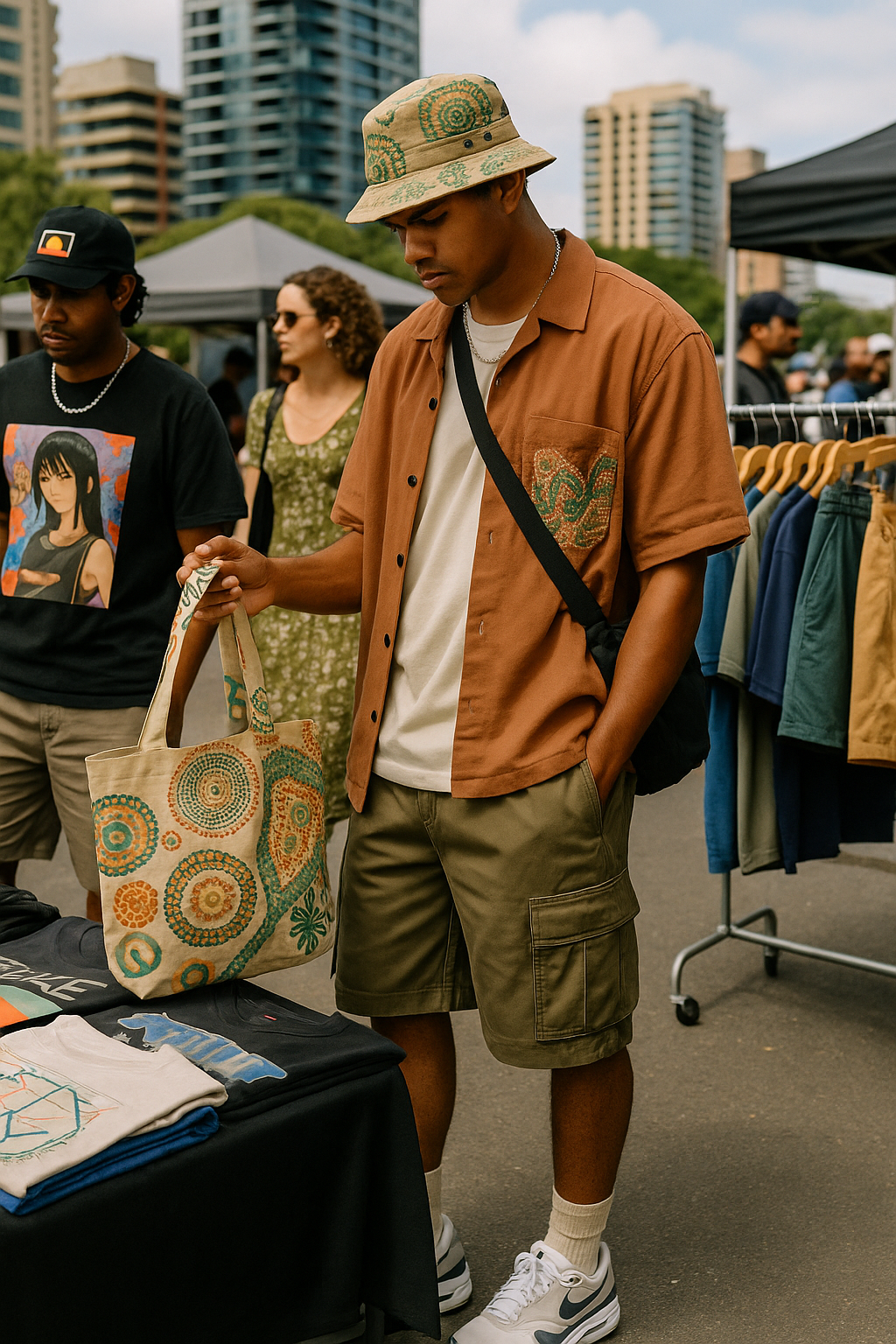
Sneakers are the currency of status and subculture. From classic Air Max lines to collaborations with Australian artists, shoes anchor otherwise minimal outfits. The resale market and local consignment stores cultivate a knowledge economy: release calendars, material specs, and colorway names are common vocabulary. Owning and caring for pairs becomes a ritual, often displayed on TikTok and Instagram Reels.
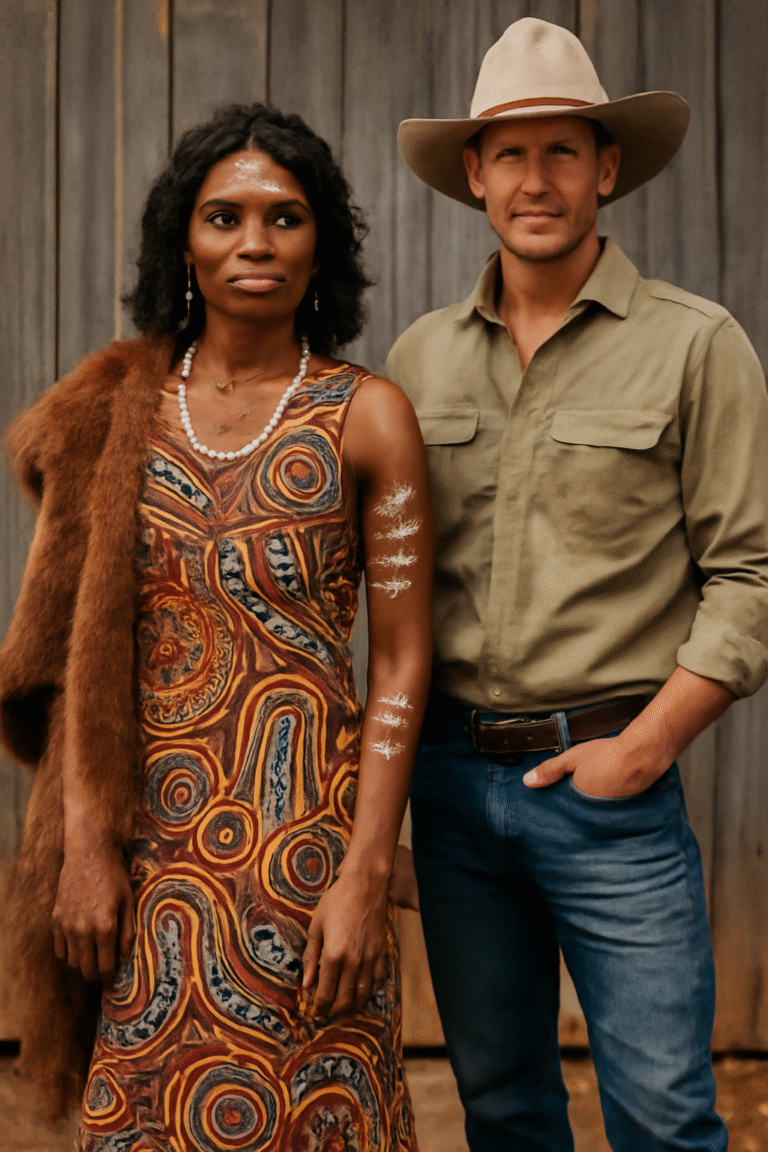
Designers increasingly acknowledge Indigenous perspectives and Australian materials. Collaborations that foreground First Nations art, ethical sourcing, and narrative consent represent a maturing scene. Natural dyes, recycled nylons, and eucalyptus‑blend fabrics reflect sustainability concerns without abandoning streetwear’s playful attitude. Utility details—carabiners, cargo pockets, tech belts—are practical as well as symbolic of movement and independence.
Pop culture’s influence is also infrastructural. Streaming platforms normalize international fits overnight, while local content creators remix them through climate‑specific layering: mesh tanks under boxy shirts in Perth heat; fleece and beanies for Melbourne’s changeable skies. Viral micro‑trends—gallery‑department‑style paint splatters, gorpcore shells, Y2K lenses—arrive faster than ever, but Australian wardrobes filter them with a grounded sensibility: comfort first, color second, logo last.
Retail reflects this mix of hype and habit. Boutiques stock both niche Japanese denim and local graphic tees; cafés double as micro‑galleries for capsule launches. Pop‑ups at car parks or record stores make drops feel like mini‑events, strengthening community ties. The result is an ecosystem where experimentation is encouraged but identity remains stable.
Ultimately, Australian streetwear thrives on adaptation. It borrows from global pop culture but edits for local conditions—sun, salt, train lines, and dance floors. The best looks feel lived‑in yet intentional, capable of moving from a BMX session to a late‑night gig with only a cap swap. That interplay between function and flair is what keeps the scene vivid, inclusive, and unmistakably Australian.