


Australia’s drink culture is a mix of old habits, Indigenous traditions, and modern global trends. From simple black tea brewed in the outback to complex specialty coffee served in city laneways, beverages tell a lot about how Australians live, socialize, and adapt.
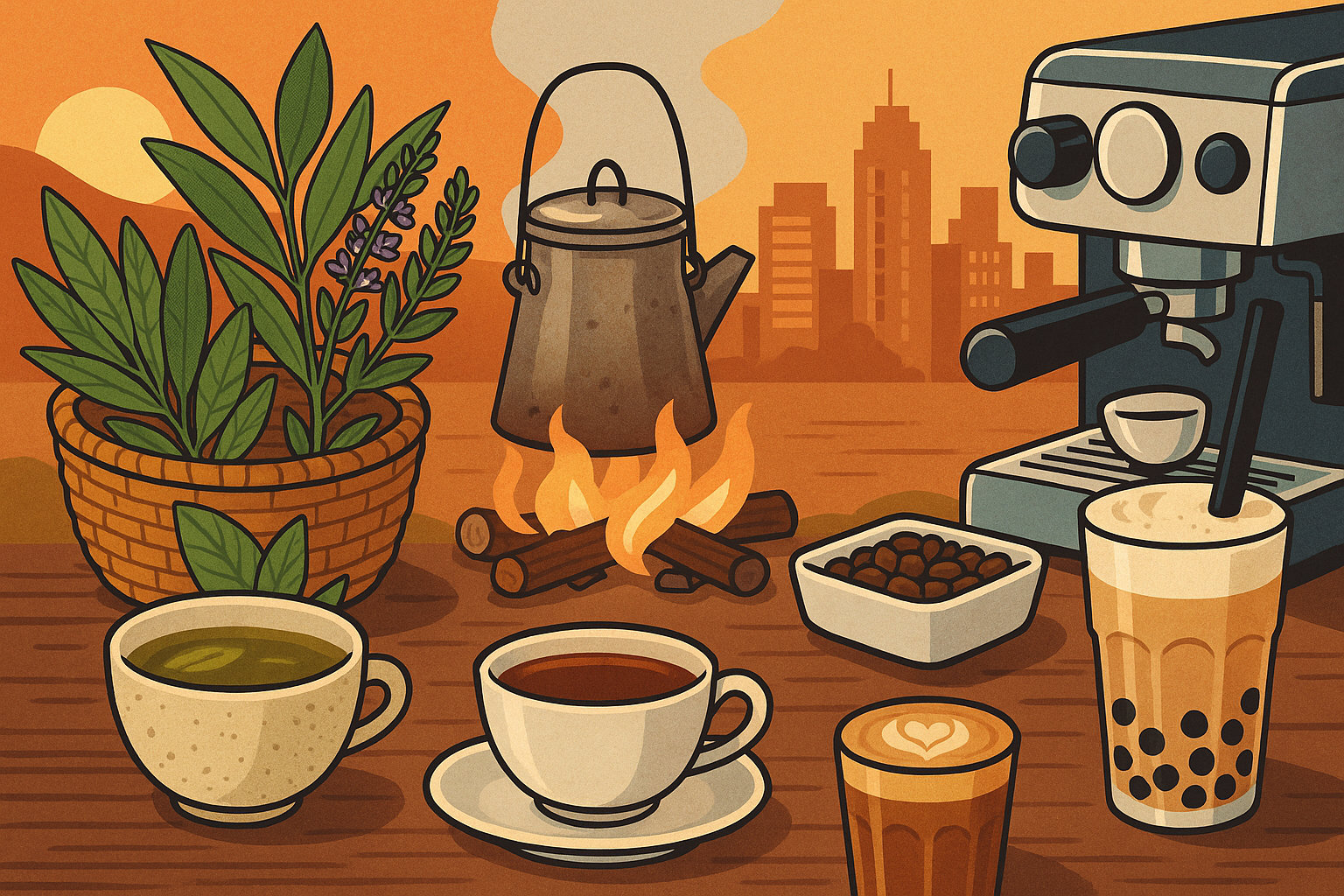
Historically, tea was the everyday drink in many Australian homes. British colonization brought a strong tea culture, with black tea and milk becoming a staple at breakfast and afternoon breaks. Workers on farms and in remote areas brewed “billy tea” over campfires, swinging the metal billycan to settle the tea leaves. This image of tea by the fire is still tied closely to the idea of the Australian bush.
Beyond this colonial story, there is a much older beverage tradition belonging to Aboriginal and Torres Strait Islander peoples. For thousands of years, Indigenous communities have used native plants to create infusions for both refreshment and wellness. Leaves of lemon myrtle and peppermint gum, seeds like wattleseed, and various barks and flowers were steeped in water, sometimes warmed, sometimes left to infuse slowly. These drinks were often linked to seasonal knowledge and local ecosystems.
In recent years, some cafes and food producers have begun highlighting these native ingredients. You might now see lemon myrtle tea on menus, wattleseed used in coffee blends, or bush tomato and finger lime incorporated into specialty drinks. While this brings exciting flavors, it also raises important questions around respecting Indigenous knowledge, fair partnerships, and cultural ownership.
Alongside tea, coffee has become a defining feature of modern Australian life. After World War II, waves of Italian and Greek migrants opened espresso bars, especially in cities like Melbourne and Sydney. Espresso-based drinks such as the flat white, latte, and cappuccino became the standard, replacing instant coffee in many homes and workplaces.
Today, Australia is known for its “third-wave” coffee culture. Specialty coffee roasters focus on single-origin beans, precise extraction methods, and latte art. Baristas talk about flavor notes like citrus, chocolate, or berry, and customers are increasingly aware of where their coffee is grown and how it is processed. Filter methods such as pour-over and Aeropress are no longer niche, and cold brew has joined the menu in hotter months.
Modern drink culture in Australia also reflects its multicultural society. Chai lattes, matcha drinks, Vietnamese iced coffee, and bubble tea show how Asian and Middle Eastern influences have blended with local tastes. At the same time, childhood favorites such as Milo, cordial, and ginger beer remain familiar, connecting generations.
Environmental concerns are shaping beverage choices as well. Many cafés now encourage reusable cups, offer ethically sourced beans, and experiment with plant-based milks like oat, soy, and almond. Consumers are more curious about fair trade, farm conditions, and the carbon footprint of imported products.
From traditional bush infusions and billy tea to experimental cold brews and Indigenous-inspired blends, beverages in Australia form a living story. What Australians drink each day is a reflection of history, migration, climate, and evolving values toward culture and sustainability.