Choosing where to eat in Australia begins with choosing the right city. Sydney excels in seafood and Asian dining, Melbourne in neighbourhood restaurants and cafés, Adelaide in wine-region access, Perth in Western Australian produce, Brisbane in subtropical cooking, and Hobart in cool-climate ingredients.
Melbourne’s official eat and drink guide provides information about restaurants, markets, cafés, bars, and culinary experiences throughout the city and surrounding regions.
Sydney: The Most International Food Landscape
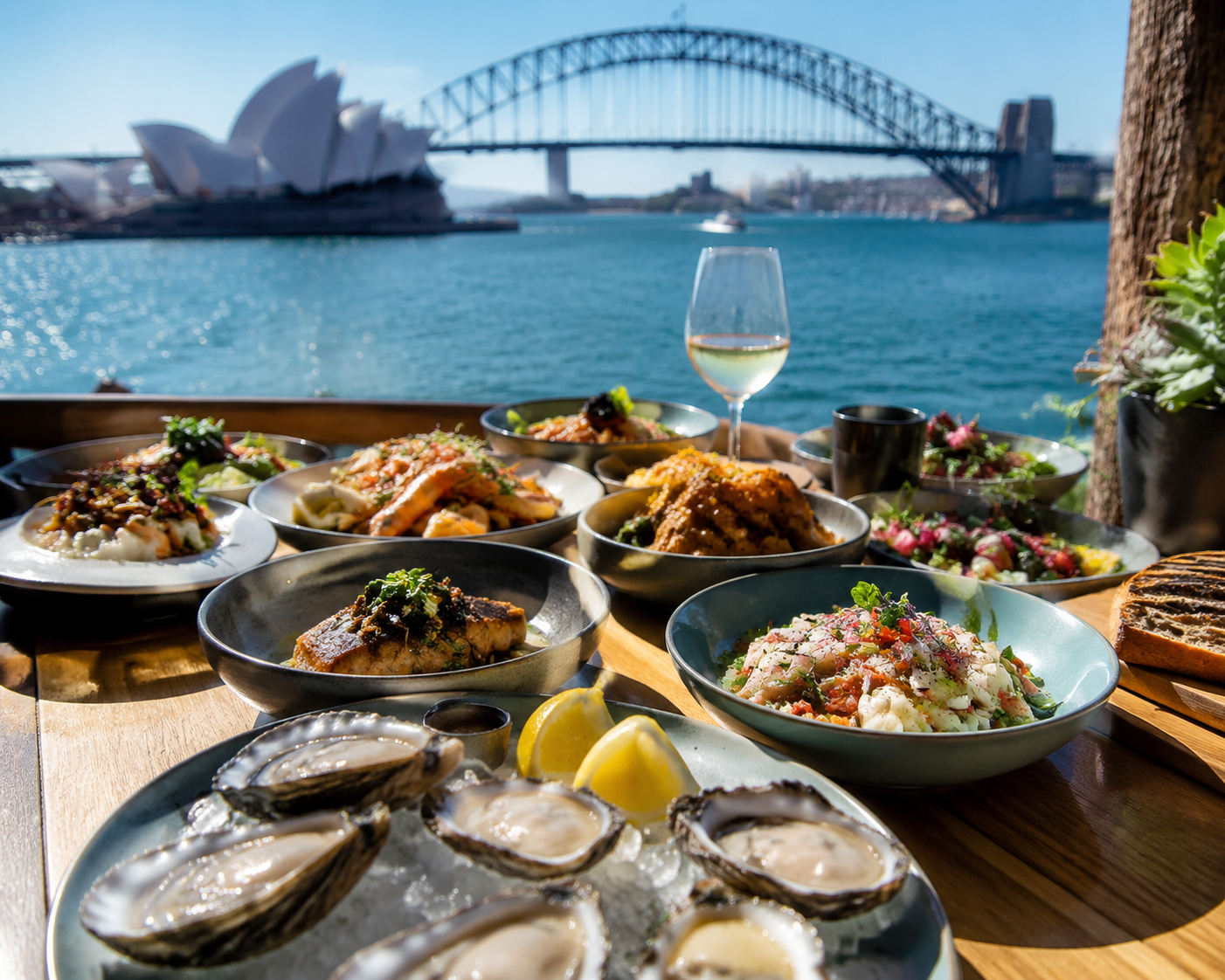
Sydney offers a combination of harbour dining, multicultural suburbs, and premium seafood. Visitors can eat Korean barbecue in Strathfield, Vietnamese noodles in Cabramatta, Indian street food in Harris Park, and Lebanese dishes in Western Sydney.
Bennelong is suited to travellers seeking a high-profile Australian dining experience. Saint Peter focuses on seafood and whole-fish preparation, while Lankan Filling Station offers a more relaxed introduction to Sri Lankan cooking.
Sydney is also one of the best places to try oysters, prawns, barramundi, and market-fresh fish.
Melbourne: Neighbourhood Dining and Café Culture
Melbourne’s culinary appeal is distributed across the city. Carlton reflects Italian migration, Richmond has a strong Vietnamese presence, Footscray offers African and Asian cuisines, and Box Hill is a major destination for Chinese food.
At the premium end, Attica explores Australian ingredients and stories through a creative tasting menu. Supernormal provides contemporary Asian-inspired dishes, and Maha focuses on Middle Eastern flavours. Tipo 00 is a useful choice for travellers prioritising pasta.
Melbourne is especially suitable for visitors who prefer discovering small restaurants rather than dining only in landmark locations.
Brisbane: Subtropical Produce and Live-Fire Cooking
Brisbane’s dining scene benefits from Queensland seafood, tropical fruit, and a growing interest in open-fire cooking.
Agnes is known for its wood-fired approach, while Gerard’s Bistro draws inspiration from Middle Eastern cuisine. Travellers can also explore the dining precincts of Fortitude Valley, South Bank, and Howard Smith Wharves.
A Brisbane itinerary can be extended to the Sunshine Coast or Gold Coast for beachside dining, seafood, and regional producers.
Adelaide: Wine and Ingredient-Led Restaurants
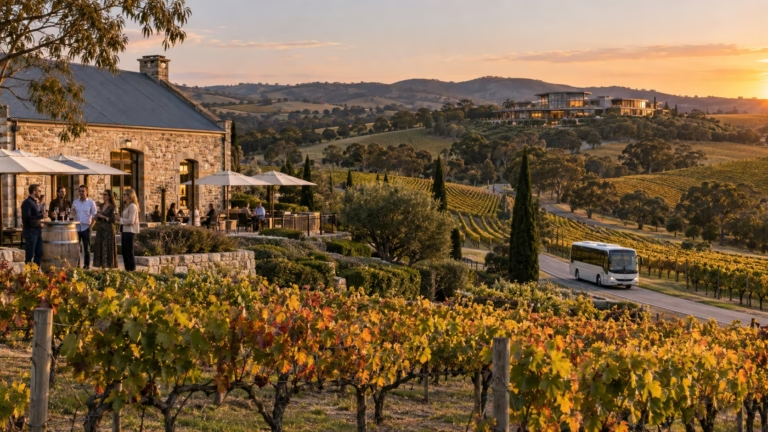
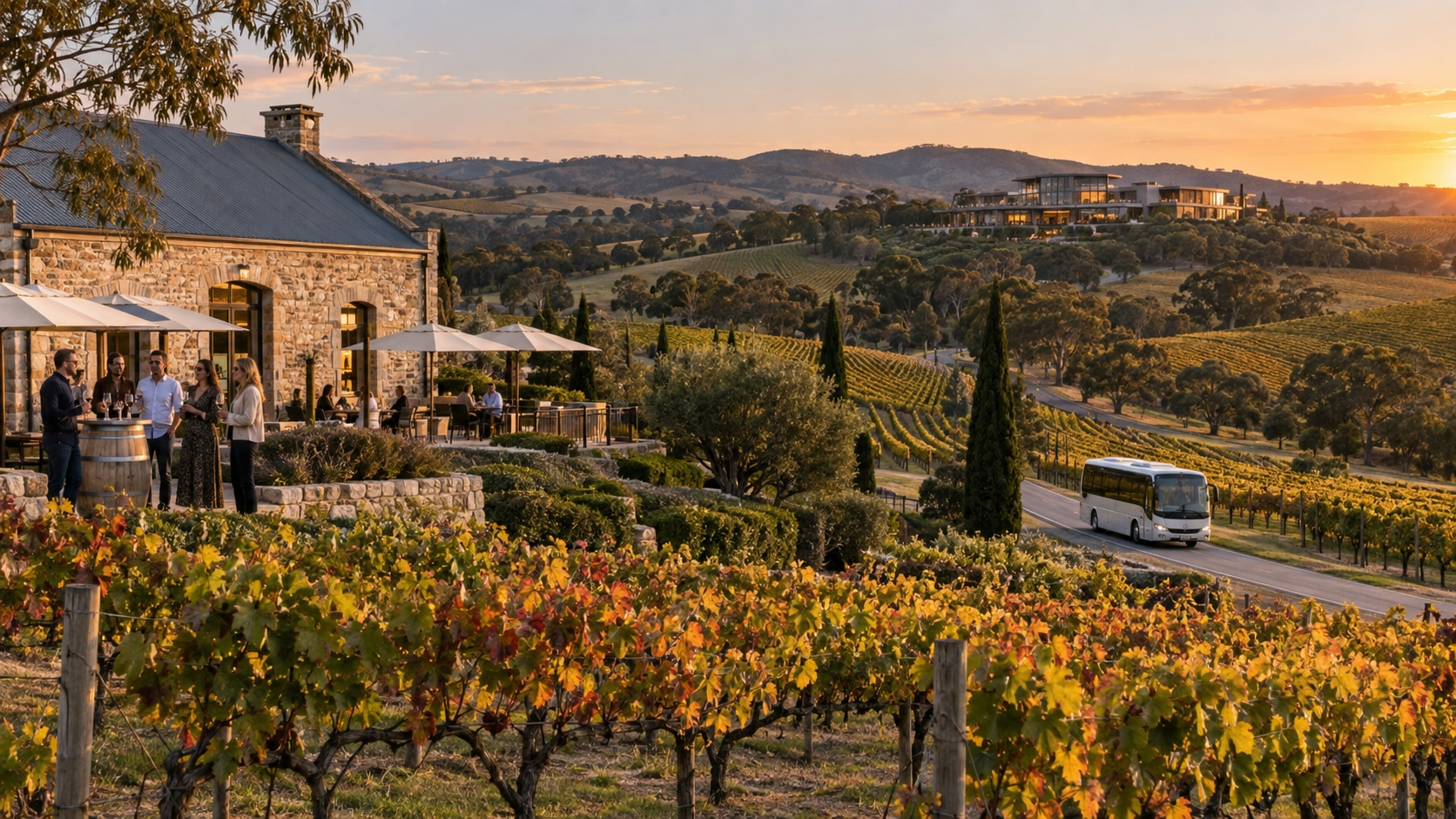
Adelaide combines a manageable city centre with easy access to several major wine regions. The Central Market is an essential stop for cheese, bread, produce, cured meat, coffee, and multicultural food stalls.
Restaurant Botanic offers a structured tasting experience centred on seasonal ingredients. Africola is more informal, energetic, and influenced by African flavours. Shobosho is another option for diners interested in Japanese-inspired cooking and fire-based techniques.
Perth: Western Produce and Indian Ocean Seafood
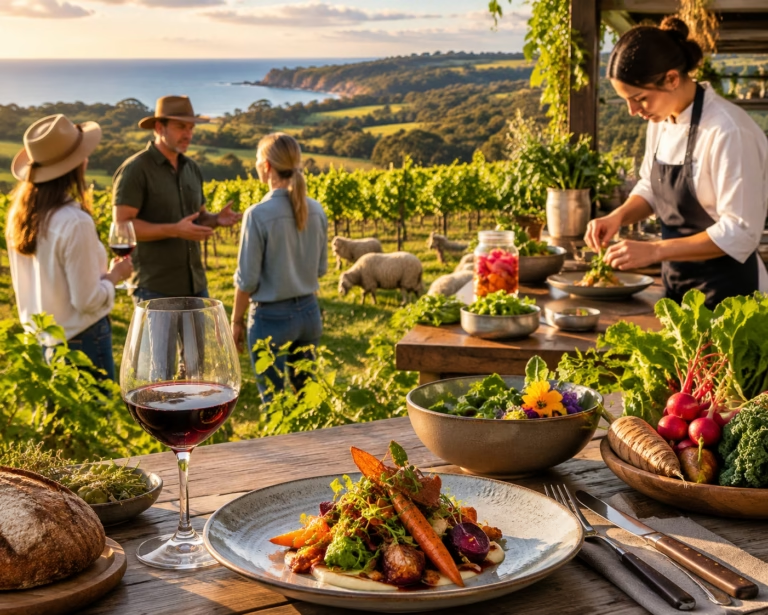
Perth should appeal to travellers interested in seafood, premium produce, and access to Margaret River.
Wildflower uses Western Australian ingredients and menus influenced by the Indigenous six-season calendar. Lulu La Delizia presents regional Italian food in a relaxed setting.
Fremantle adds markets, breweries, bakeries, and casual seafood venues to the wider Perth experience.
Hobart: Small Scale, Strong Identity
Hobart’s restaurant scene is compact but closely connected to Tasmanian farms, fisheries, vineyards, and artisan producers.
Fico offers European-influenced seasonal cooking, while Aloft is known for contemporary menus and waterfront views. Travellers should also explore Salamanca Market for honey, cheese, pastries, preserves, and fresh produce.
Selecting the Right City
Sydney and Melbourne offer the widest variety. Adelaide is ideal for wine travellers, Perth for Western Australian produce, Brisbane for subtropical dining, and Hobart for a slower regional experience.
Restaurant opening times, tasting-menu policies, and reservation requirements should always be checked directly before departure.