The $50 Million Push Behind Australia’s Fashion Export Boom
The Australian fashion industry has long punched above its weight creatively, but commercial expansion into overseas markets has historically relied on individual brand efforts rather than coordinated national strategy. That paradigm is shifting dramatically in 2026. The Australian Fashion Council’s Global Gateways initiative—powered by Austrade’s $50 million Accessing New Markets Initiative—has placed Australian designers in front of international buyers at an unprecedented scale, transforming how local labels approach export markets.
From Fragmented Efforts to Structured Pathways
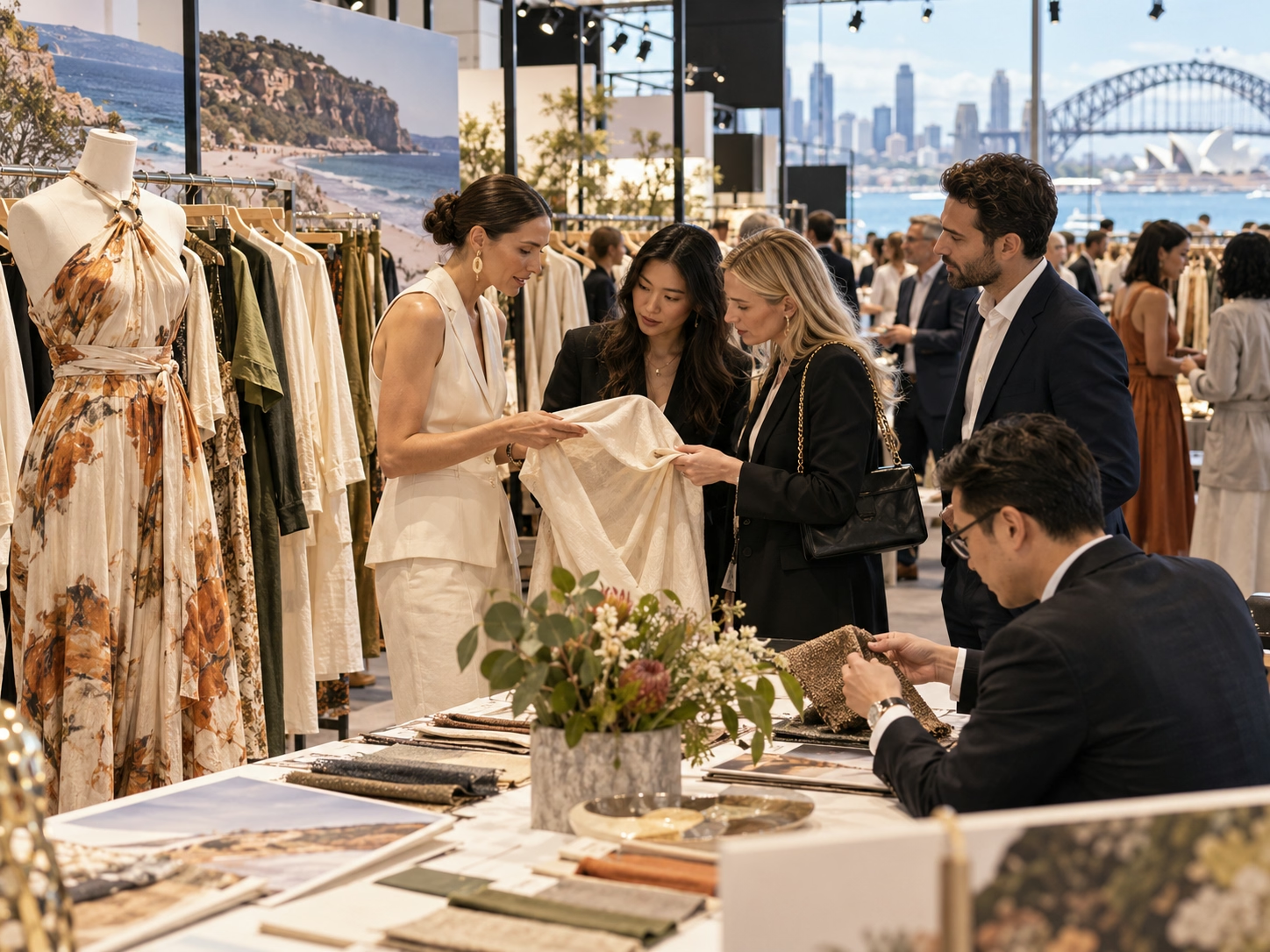
In September 2026, the AFC sent ten Australian designers to CENTRESTAGE Hong Kong, Asia’s largest fashion trade event. The results were remarkable: over 180 buyer appointments were recorded, triple the number from the 2025 pilot program. More than 12,000 trade buyers from 93 countries attended the fair, setting a new attendance record.
The significance extends beyond raw numbers. Participating brands—including Gary Bigeni, Buluuy Mirrii, Van Brussel, and Viceta Wang—reported strong interest not just from traditional markets like Japan and Korea, but also from buyers in Taiwan and the United Kingdom. As AFC General Manager Sam Delgos noted, the structured buyer matchmaking program allows designers to bypass the costly trial-and-error approach that has historically characterised Australian fashion’s international forays.
Why Asia Now?
The strategic pivot toward Asia reflects both opportunity and necessity. The Asia-Pacific fashion market is valued at over $700 billion, representing approximately 40 per cent of the global fashion market. Hong Kong Trade Development Council projections suggest the APAC fashion sector will grow at a compound annual growth rate exceeding 3 per cent through 2029.
Simultaneously, shifting trade dynamics have made diversification urgent. US tariffs on Australian fashion exports, now sitting at 12.5 per cent, have exposed the vulnerability of over-reliance on a single market. The AFC’s Global Gateways program directly responds to this exposure by opening durable wholesale channels across Asia.
The Paris Dimension
The strategy extends beyond Asia. In a landmark development, the AFC secured a dedicated showroom at Paris Fashion Week Womenswear SS27, with up to 15 Australian designers selected to participate. This initiative follows Australia’s recently concluded trade agreement with the European Union, which opens a market of approximately 450 million consumers across 27 countries to Australian designers.
NSW Minister for the Arts John Graham highlighted the structural gap that Global Gateways addresses: “The top priority that was put forward was the need for industry and governments to work together to grow export pathways for Australian designers”.
What This Means for Emerging Brands
The program’s design specifically removes financial barriers. Participating brands pay virtually no upfront cost, with government funding covering showroom space, buyer matchmaking, and export readiness education. For emerging designers who might otherwise find international trade shows prohibitively expensive, this represents a genuine democratisation of access to global markets.
Australian fashion contributes $27.2 billion to the national economy, employs approximately 489,000 people—77 per cent of them women—and generates $7.2 billion in exports annually. The coordinated push through Global Gateways suggests those export figures could rise significantly in coming years as more brands establish sustainable international wholesale relationships.