
Australia’s Tourism Industry Is Embracing Greater Accessibility
Australia is increasingly positioning itself as a destination where people with disabilities, older travellers and visitors with additional accessibility needs can experience its cultural landmarks, natural wonders and outdoor adventures.
Rather than concentrating exclusively on wheelchair ramps and accessible accommodation, tourism operators are developing experiences that address mobility limitations, sensory sensitivities and communication barriers.
This transformation reflects a substantial market opportunity. Tourism Research Australia reported that travellers with accessibility needs accounted for 70.5 million trips in 2024, representing 22% of all trips nationwide. Their combined travel expenditure reached approximately AUD 29.2 billion.
These findings demonstrate why accessibility is becoming an important consideration in destination development, tourism investment and visitor services.
Sydney Offers More Inclusive Cultural Experiences
Sydney provides several examples of attractions adapting their facilities to accommodate different visitor requirements.
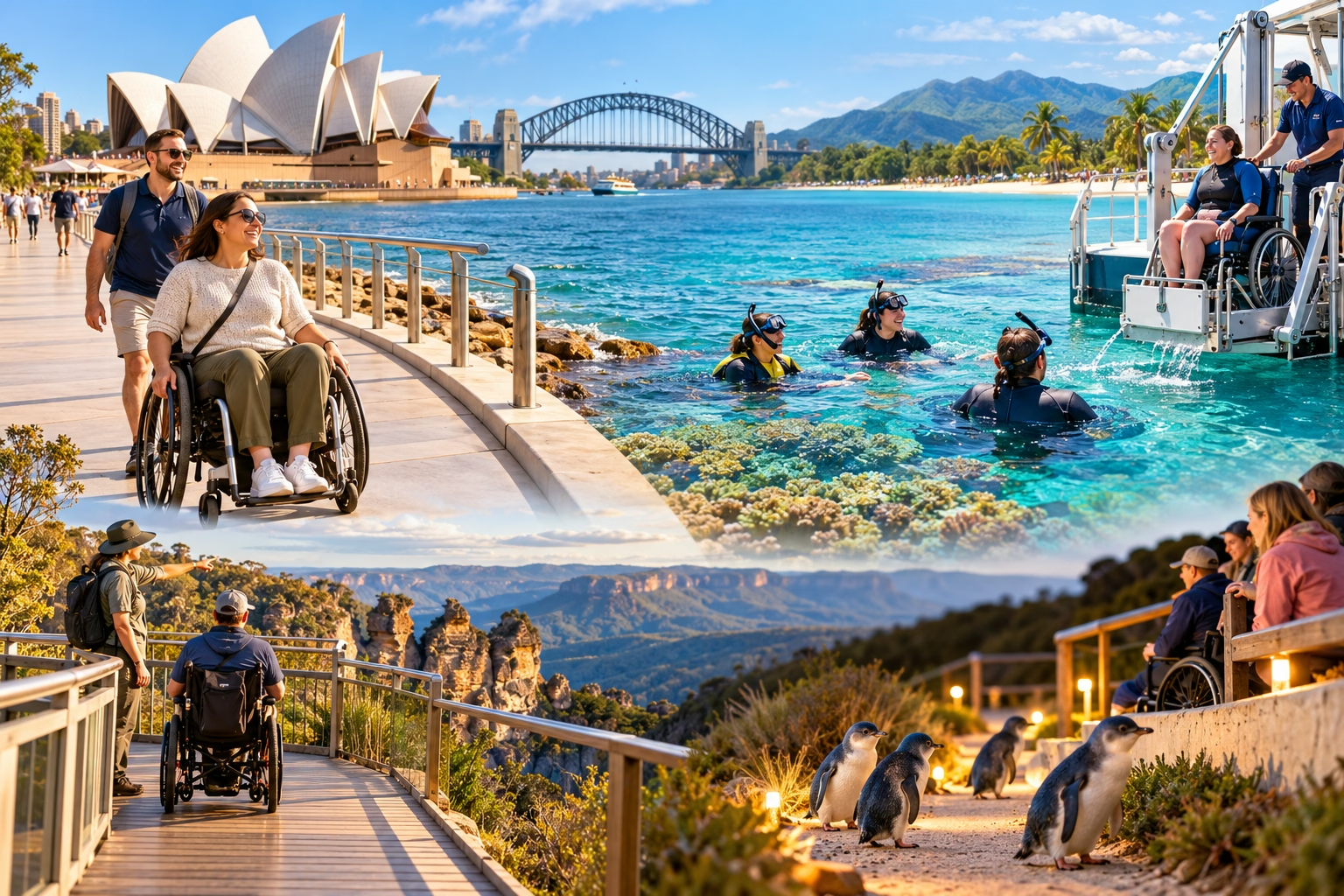
The Sydney Opera House offers mobility access tours for visitors who experience difficulties navigating stairs and traditional walking routes. Relaxed performances also help audiences with sensory sensitivities enjoy cultural activities in a more comfortable environment.
Nearby, Bondi Beach features a level waterfront promenade, while specialist operators provide opportunities for visitors with different physical capabilities to experience Australia’s surfing culture.
Beyond the city, the Blue Mountains offer wheelchair-friendly walking areas, including the Three Sisters Walk, alongside accessible sightseeing experiences.
These facilities enable visitors to explore Australia’s most recognisable destinations without being restricted to conventional sightseeing arrangements.
Queensland Makes Nature and Marine Adventures More Accessible
Queensland demonstrates how inclusive tourism can extend beyond museums, hotels and urban infrastructure.
At the Great Barrier Reef, Quicksilver Cruises operates experiences incorporating accessible marine facilities. Its Agincourt Reef pontoon features a water-powered lift that can assist visitors with mobility restrictions into the water.
Meanwhile, Cairns offers accessible waterfront pathways, accommodation options and recreational facilities. Palm Cove and Port Douglas also provide beach-access equipment designed to help visitors with mobility needs enjoy coastal environments.
A significant 2026 development emerged in Brisbane, where the Queensland Government backed a proposed accessible adventure tourism project involving a wheelchair-accessible flying fox, riverboats and elevated picnic experiences.
The initiative illustrates growing interest in making adventure tourism more inclusive rather than limiting accessible activities to passive sightseeing.
Victoria and Regional Australia Expand Visitor Participation
Victoria’s Phillip Island provides another example of accessibility-focused tourism.
Its Penguin Parade accommodates visitors with mobility and sensory requirements through accessible viewing arrangements, quiet spaces and sensory-support equipment.
The broader approach recognises that accessibility involves more than physical infrastructure. Visitors with autism or sensory processing differences may require quieter environments, flexible arrangements and clear information before arrival.
Regional accommodation is also receiving attention. In April 2026, the New South Wales Government announced AUD 500,000 in support for accessibility improvements at Sails Holiday Park in Belmont, including cabins, accessible pathways and aquatic equipment.
Reliable Information Remains Essential for Inclusive Travel
Despite improvements, accessibility differs between attractions, transport providers and accommodation operators.
Travellers should confirm doorway dimensions, accessible bathrooms, vehicle arrangements, assistance services and activity-specific requirements before making reservations.
Australia’s expanding inclusive tourism sector demonstrates that successful destination development depends on both practical accessibility and meaningful visitor participation.
For further information, see the official Tourism Research Australia accessible tourism report, which provides national visitor statistics and travel behaviour analysis.