From Bedroom to Boardroom: The Structural Shift Behind Creator Studios
The Australian screen sector is witnessing a structural inversion that few predicted a decade ago. The most ambitious production companies in the country are increasingly being founded not by television executives or film-school graduates, but by digital creators who built audiences first and infrastructure second. The evidence is no longer anecdotal. Content creators now account for 38% of Australia’s 50 most famous people — more than actors, musicians, and athletes combined — according to a 2026 Rocket Agency study reported by Fabulate. Fame has translated into leverage, and leverage has translated into studios.
The Spawnpoint Template: Capital, Infrastructure, and Internalised Operations
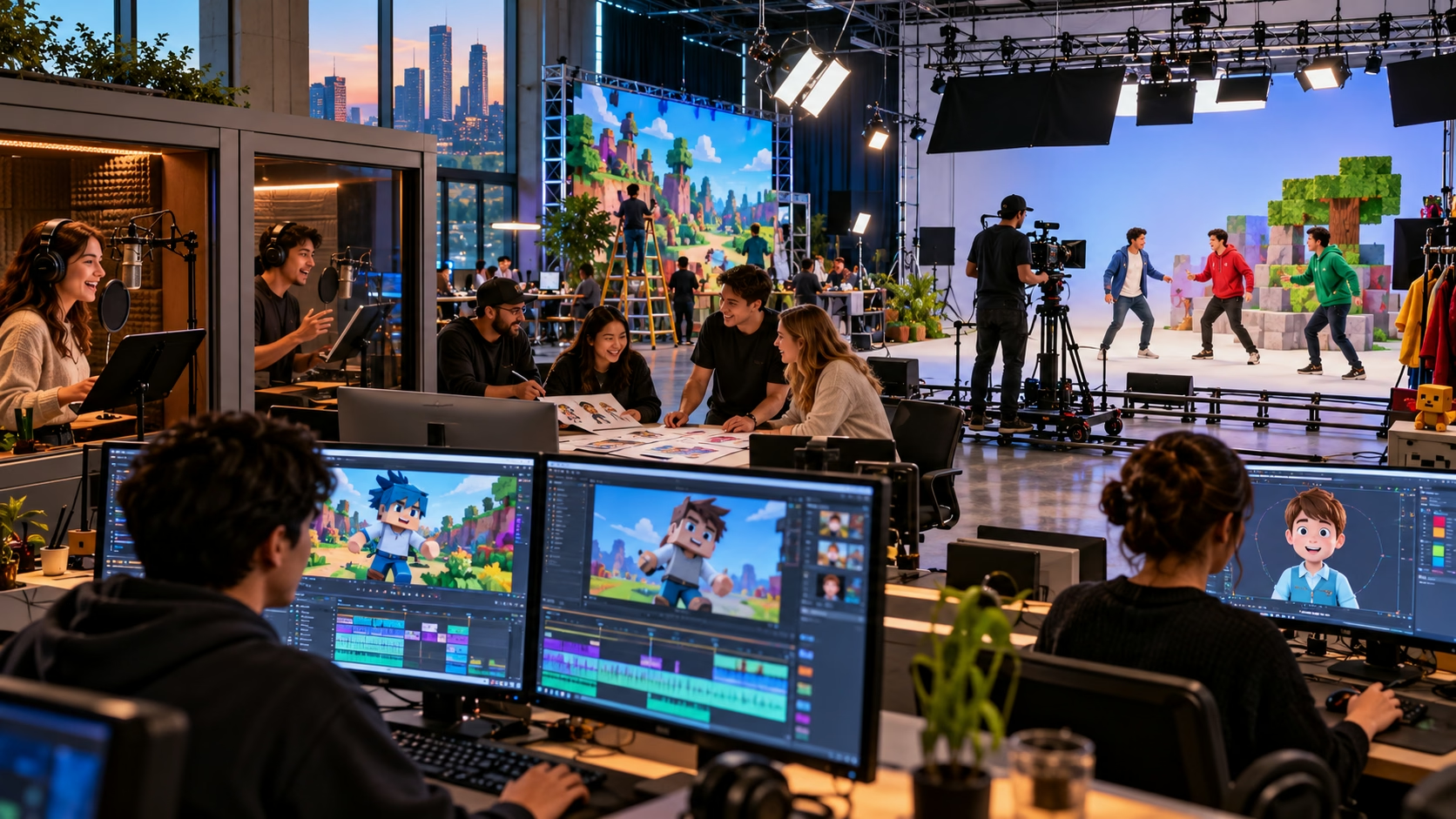
The clearest embodiment of this shift is Melbourne’s Spawnpoint Media, the production company born from Jordan Barclay’s EYstreem YouTube channel. What began as a single Minecraft creator operation has become a multimillion-dollar studio backed by a $5 million investment from Spotter, operating a multi-story headquarters with 12 recording suites, a cyclorama, a full soundstage, and a team exceeding 100 people. Spawnpoint does not simply produce content for Barclay’s 13.6 million subscribers; it conceptualises new channels, casts local Australian talent as on-screen faces, and scripts and produces dozens of long- and short-form videos monthly across a portfolio that includes Firelight, Milo and Chip, and Make Waves. The studio has internalised data analysis, brand partnerships, marketing, e-commerce, finance, and product development — functions that traditional production companies often outsource. The result is a vertically integrated creator studio that competes on output volume and IP ownership, not just on audience reach.
Beyond One Creator: A Portfolio Logic Takes Hold
The portfolio logic extends beyond Spawnpoint. Sydney-based Lost, founded in January 2026 by former corporate lawyer Tristan Heiner, co-founds YouTube-first entertainment companies with athletes and celebrity creators, taking equity rather than charging service fees and fronting all production and operating costs. Lost raised an AUD $1.4 million seed round in early 2026 and operates with a lean team including a YouTube strategist based in Sweden. Meanwhile, Glitch Productions in Sydney’s Parramatta CBD has built an independent animation studio around original long-form YouTube shows, with its channel exceeding 22 million subscribers and its flagship IP The Amazing Digital Circus surpassing 400 million views on the pilot alone. These are not influencer side-hustles. They are production entities with payroll, facilities, and IP libraries.
The Capital Signal: Brands and Institutions Are Following the Creators
The financial architecture around creator-led entertainment is maturing in parallel. AiMCO and the Marketing Association of Australia reported in September 2026 that 84% of surveyed organisations currently invest in creator marketing, and 77% plan to increase that investment over the next two years — with none expecting to decrease spend. Social video, the paid amplification category where creator content sits, accounted for 41% of total video spend in Australia’s FY26, up from 29.5% a year earlier, according to IAB Australia and PwC data. When brand budgets move at that velocity, creators with studio infrastructure become the natural recipients — not because they are cheaper, but because they can deliver entertainment formats at scale.
Why This Matters for the Broader Screen Economy
The creator-to-studio pipeline is not a niche curiosity. It represents a parallel production economy with different cost structures, faster greenlight cycles, and direct audience feedback loops. The creators who are building studios now are positioning themselves as the independent production sector of the next decade. The question for the Australian screen industry is no longer whether creators can produce at scale, but whether traditional financing and distribution frameworks can adapt fast enough to partner with them.