
The Australian culinary landscape has long been dominated by the romanticized image of the independent operator—the barista who knows your name, the chef who sources local heirloom vegetables. However, in 2026, passion alone is no longer a viable business strategy. Inflationary pressures on fresh produce and a highly competitive labor market have forced small to medium enterprises (SMEs) in the food sector to adopt a technological armor once reserved for corporate giants.
The Shift from Transaction to Data Intelligence
Historically, a cash register was simply a drawer for money. Today, modern cloud-based POS systems like Square, Lightspeed, and Kounta have evolved into the central nervous system of a hospitality business. For Melbourne’s laneway cafes and Sydney’s beachside bistros, the adoption of these systems is not about trendiness; it is about survival.
The specificity of this evolution lies in granular data capture. An independent restaurant owner in Fitzroy can now dissect their weekly sales to a molecular level. They can identify that oat milk flat whites are underperforming on Tuesday mornings but spiking on weekends, allowing for dynamic menu adjustments. More critically, integrated inventory management software automatically deducts ingredients as dishes are sold. According to the Australian Bureau of Statistics (ABS), food service businesses utilizing integrated digital inventory tracking report a reduction in food waste by up to 20% compared to those using manual tracking, a significant margin in an industry where profit margins hover around 4-6% (ABS, 2026).
Automating the Labor Crisis
Australia’s hospitality sector continues to face a significant skills shortage. With the Fair Work Commission adjusting award wages annually, the cost of human labor is a critical pain point. Digitalization is mitigating this through workflow automation.
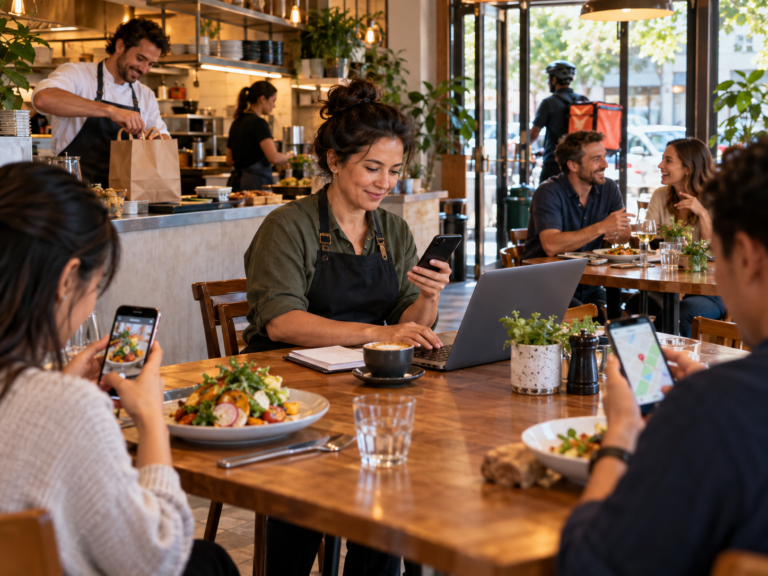
We are seeing a rise in “ghost kitchens” run by independent chefs who operate solely through delivery apps, but the real innovation is happening inside the physical venues. QR code ordering—once a necessary evil of the pandemic—has matured into a sophisticated guest management tool. Patrons can now order, pay, and split bills via a mobile web app without flagging down a server. This allows independent venues to run a “skeleton crew” during off-peak hours (3 PM to 5 PM) without sacrificing customer service quality.
The Local SEO Link
Furthermore, digital tools are bridging the gap between brick-and-mortar presence and online discoverability. Reservation platforms like OpenTable and SevenRooms are now integrated with Google Maps data. This allows a small restaurant in Brisbane to capture tourists searching “dinner near me” with surgical precision, bypassing the need for expensive traditional advertising. The data link between these platforms ensures that a restaurant’s availability is updated in real-time across search engines, maximizing table turnover.
By embracing these sophisticated digital ecosystems, Australia’s beloved independent food scene is not losing its soul; it is securing its future.