
Australia’s food festivals are more than public gatherings filled with delicious meals. They are cultural celebrations that reflect the country’s diversity, agricultural richness, coastal lifestyle, and growing love for creative dining. Across the nation, food festivals bring together farmers, chefs, winemakers, brewers, seafood producers, bakers, Indigenous food educators, and visitors who want to experience Australia through taste.
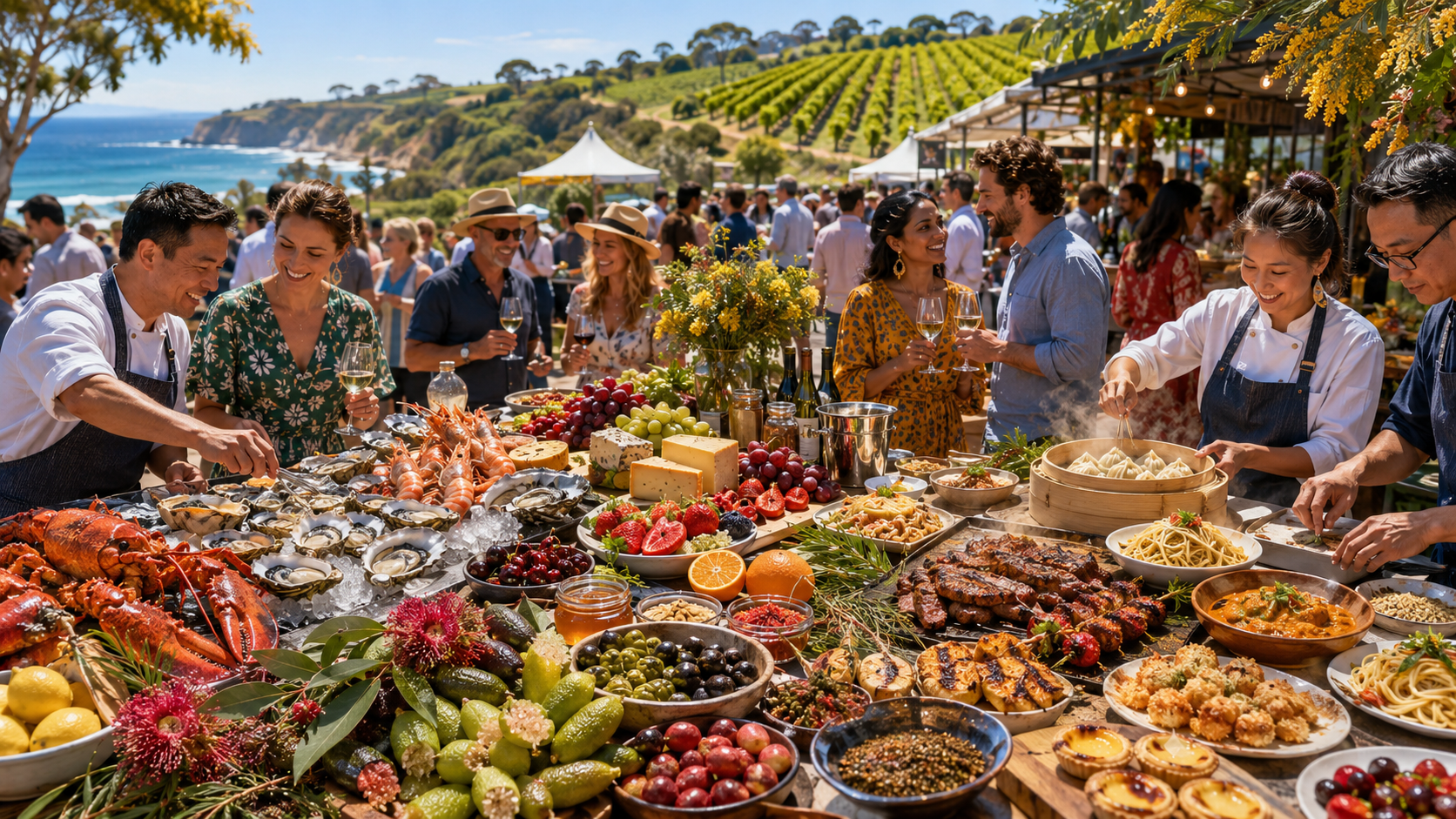
One of the most interesting aspects of Australian food festivals is how strongly they are connected to place. In coastal regions, seafood often becomes the main attraction. Festivals in areas known for oysters, prawns, fish, and lobster highlight the importance of the ocean to Australian cuisine. Visitors can enjoy freshly shucked oysters, grilled seafood, fish tacos, seafood platters, and cooking demonstrations that show how local ingredients can be prepared simply yet beautifully. These events also help people understand the work of fishers and aquaculture producers who supply fresh seafood to restaurants and markets.
In wine-producing regions, food festivals often combine local dishes with wine tastings. Areas such as the Barossa Valley, Margaret River, Yarra Valley, Hunter Valley, and McLaren Vale are well known for events where visitors can sample regional wines alongside artisan cheeses, smoked meats, handmade chocolates, sourdough bread, and seasonal produce. These festivals are not only about eating and drinking; they also educate visitors about terroir, farming practices, food pairing, and the relationship between land and flavor.
Australia’s multicultural identity is another major reason its food festivals are so vibrant. Cities such as Sydney, Melbourne, Brisbane, Adelaide, and Perth host events celebrating Italian, Greek, Vietnamese, Chinese, Indian, Thai, Lebanese, Japanese, Korean, and many other cuisines. These festivals allow communities to share traditional recipes, family cooking methods, music, dance, and stories. A visitor might taste dumplings, curries, souvlaki, noodles, satay, baklava, sushi, or street-style barbecue in one lively setting. Through food, people experience the cultural history of migration and settlement that has shaped modern Australia.
Indigenous Australian ingredients are also gaining greater attention at food festivals. Native foods such as wattleseed, lemon myrtle, finger lime, bush tomato, pepperberry, quandong, and saltbush are increasingly featured in tastings, workshops, and chef demonstrations. These ingredients connect visitors with the deep food knowledge of First Nations peoples and encourage respect for ancient food traditions. When presented thoughtfully, these experiences help broaden public understanding of sustainable harvesting, native plants, and the long history of food culture on the continent.
Food festivals also support local economies. Farmers and small producers can sell directly to customers, while restaurants and food trucks gain exposure to new audiences. Tourists often travel specifically for food events, bringing income to hotels, transport services, markets, and nearby attractions. For regional towns, a successful food festival can strengthen community pride and attract national attention.
What makes Australian food festivals special is their combination of freshness, diversity, and storytelling. They celebrate seafood from the coast, wine from fertile valleys, fruit from orchards, meat from farms, native ingredients from ancient landscapes, and recipes brought by communities from around the world. Together, these events show that Australian cuisine is not one single style. It is a rich, evolving food culture shaped by land, people, climate, migration, and creativity.