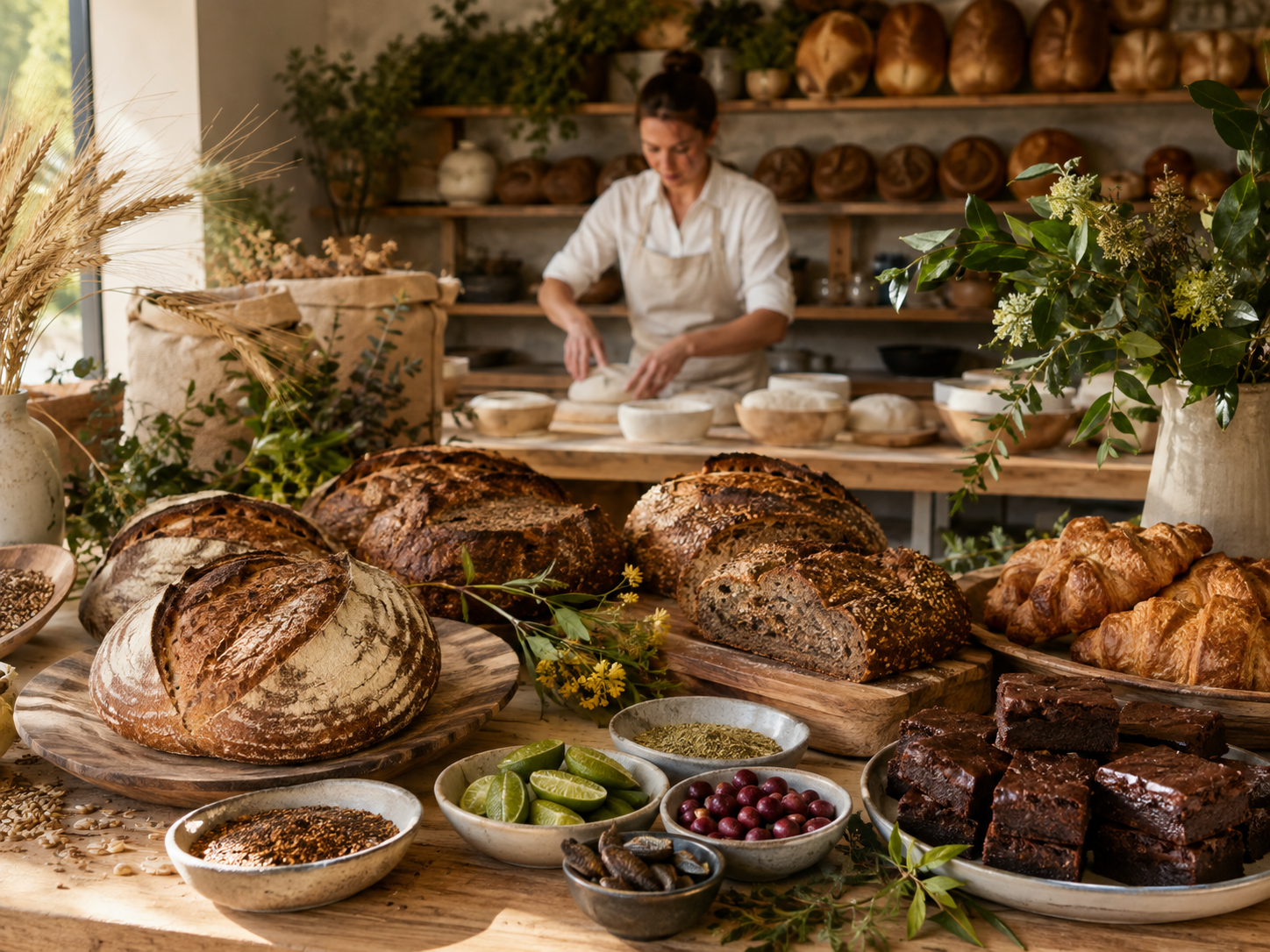
The story of Australian baking is often told through two iconic images: a cast-iron pot of damper resting in campfire coals and a glass cabinet stacked with golden croissants. Between these images lies nearly two centuries of adaptation, migration, and relentless innovation. Today, bakeries across Sydney, Melbourne, and Brisbane are not only preserving European techniques but also rewriting the rules of pastry with native ingredients and health-focused formulas.
Bush Damper and the Colonial Foundation
Damper, a simple flour-and-water bread baked in ashes, was a survival food for early settlers and stockmen. It relied on self-raising flour or bicarbonate of soda because yeast was scarce in remote areas. While damper remains a symbol of outback resilience, it never became a commercial bakery staple. Instead, it laid the foundation for a distinctly Australian willingness to improvise with limited ingredients. The lack of refrigeration, long distances between towns, and reliance on imported wheat shaped a practical baking culture that valued hard-wearing loaves over delicate pastries.
Post-War Immigration and European Techniques
After 1945, waves of Italian, Greek, German, and later Vietnamese migrants transformed the local bakery scene. Italian panetteria introduced ciabatta and focaccia; Greek communities popularised filo-based pastries such as spanakopita; Vietnamese migrants redefined the humble bread roll through banh mi. By the 1990s, multicultural neighbourhoods had turned the Australian bakery into a daily lesson in global baking. Suburban bakeries began stocking sourdough, rye, and olive bread alongside the traditional white sandwich loaf, and customers learned to ask for bread by its European name.
The Artisan Sourdough Boom
The 2010s saw a sourdough revival that moved far beyond San Francisco. Bakeries such as Brickfields in Sydney and Baker D. Chirico in Melbourne championed long fermentation, stone-ground flour, and wood-fired ovens. Consumers began asking about hydration levels and fermentation time. This shift rewarded independent operators who could tell a story behind each loaf, pushing large industrial bakeries to introduce premium sourdough lines. The obsession with gut health and slow food also played a role, as nutritionists and food writers highlighted the digestibility benefits of naturally leavened bread.
Pastry Innovation in Urban Cafés
Modern Australian patisserie now blends French technique with local produce. Lamingtons appear filled with finger lime curd, croissants are laminated with Vegemite butter, and vanilla slice is reimagined with Davidson plum custard. Café culture has accelerated this experimentation, as baristas and pastry chefs collaborate to create Instagram-ready desserts that still respect classic textures. The rise of brunch culture has also created demand for hybrid items such as croissant-doughnuts and sourdough cinnamon scrolls, giving bakers a new canvas for creativity.
2026 Industry Snapshot
According to IBISWorld’s 2026 Bread Production in Australia report, the industry generates approximately AUD 4.9 billion in annual revenue, with artisan and specialty bread accounting for a rising share. The same report notes that health-conscious purchasing and premiumisation are driving steady growth despite flat population-adjusted bread consumption. You can view the latest industry data at IBISWorld’s Bread Production page. This commercial resilience has encouraged investment in new equipment, apprenticeship programs, and direct-to-consumer subscription models.
Looking ahead, the Australian bakery scene appears poised to deepen its connection to native agriculture and regenerative flour. The next chapter may be written not in city ovens alone but in partnerships with Indigenous growers and regional grain networks.