The New Currency of Loyalty
Australia’s fan economy has moved far beyond the simple transaction of buying a ticket or a jersey. In 2026, the relationship between fans and the entities they support—whether an AFL club, an NRL franchise, or a touring international artist—has evolved into a sophisticated, multi-layered economic ecosystem. At its core lies a simple but powerful shift: fans no longer just consume; they invest, and they expect exclusive returns on that investment.
Membership as the Gateway to Belonging
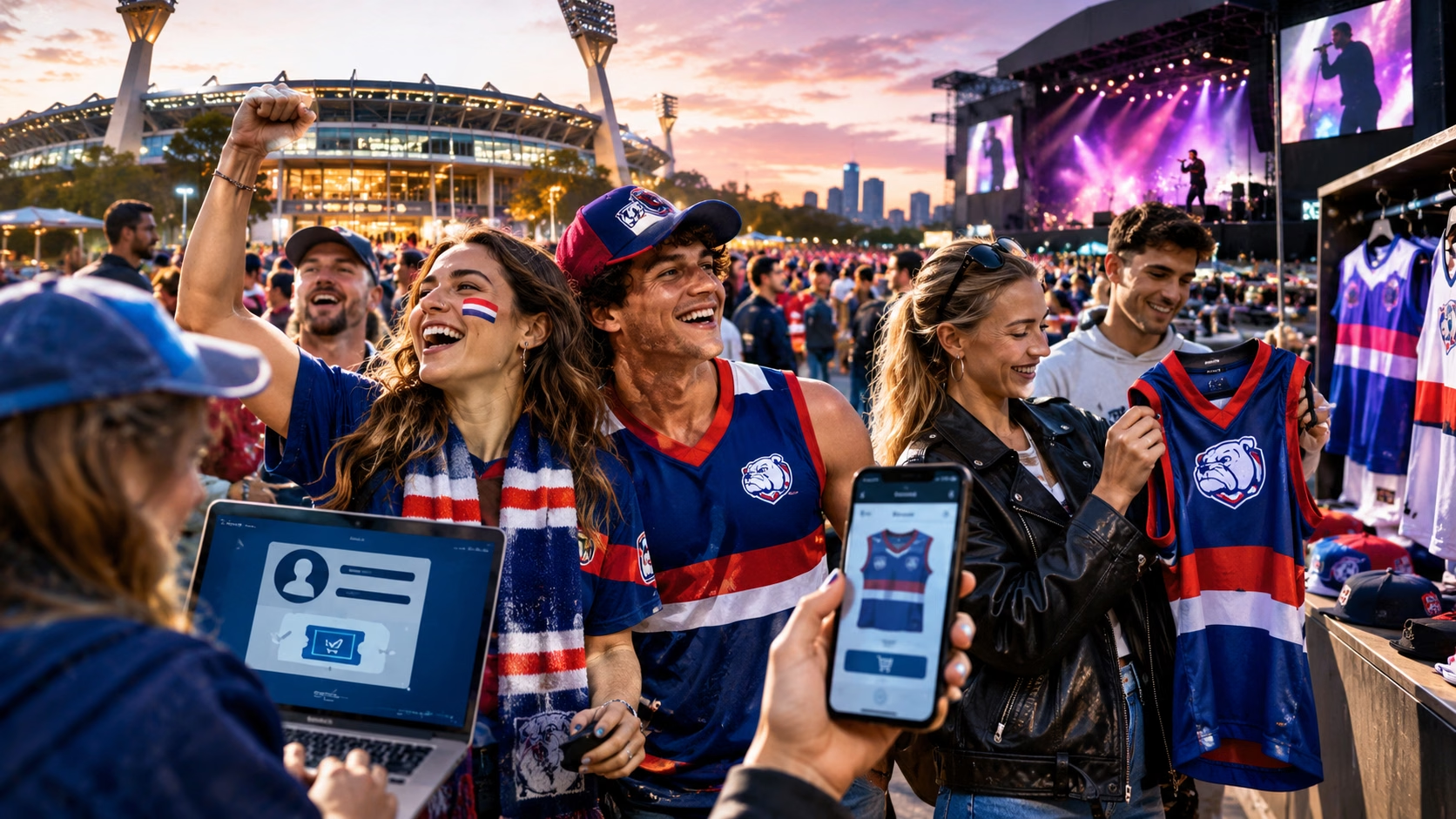
The foundation of this economy remains paid membership, but the scale is staggering. The AFL alone counts approximately 1.4 million paying club members, a figure that underpins the league’s A$1.2 billion revenue base . For clubs like the Western Bulldogs, membership revenue has become a critical financial pillar, reaching A$10.84 million in the 2025 financial year from a record 65,584 members . This is not merely a donation; it is a purchase of identity. Membership grants priority access to finals tickets, exclusive member-only content, and, increasingly, first rights to limited-edition merchandise drops.
The Exclusive Merchandise Multiplier
Merchandise has transformed from a souvenir stand afterthought into a high-margin, data-driven revenue stream. Adobe Digital Insights projects a 53% surge in online traffic for football merchandise during the 2026 finals season, driven by the convergence of the AFL and NRL grand finals with the NFL’s first-ever regular-season game on Australian soil . What makes this wave different is exclusivity. Clubs are deploying “member-first” merchandise windows, where scarves, commemorative guernseys, and collaboration pieces are released to paid members 48 hours before general public access. This strategy does two things: it rewards loyalty and creates artificial scarcity that drives urgency.
The Digital Fandom Engine
The engine powering this economy is increasingly digital. Among Australians under 35, 50% say social media platforms directly influence their footy-related purchases, and 44% are swayed by content creators or influencers . Clubs have responded by treating merchandise drops like product launches, complete with influencer seeding and TikTok live selling events. The rise of AI-driven retail traffic—up 108% year-on-year in July 2026—suggests fans are using chatbots and recommendation engines to hunt down specific items, often within minutes of a limited drop going live .
What This Means for the Ecosystem
For Australian sports and entertainment brands, the lesson is clear: loyalty is no longer passive. The fan who pays for membership expects a differentiated experience, and the fan who buys exclusive merchandise expects it to mean something. The clubs and artists that win in 2026 are those that treat their most devoted followers not as customers, but as stakeholders in a community with tangible privileges. The economic upside is significant, but so is the demand for authenticity—a commodity that cannot be mass-produced.