The Rise of Warehouse-Scale Virtual Reality
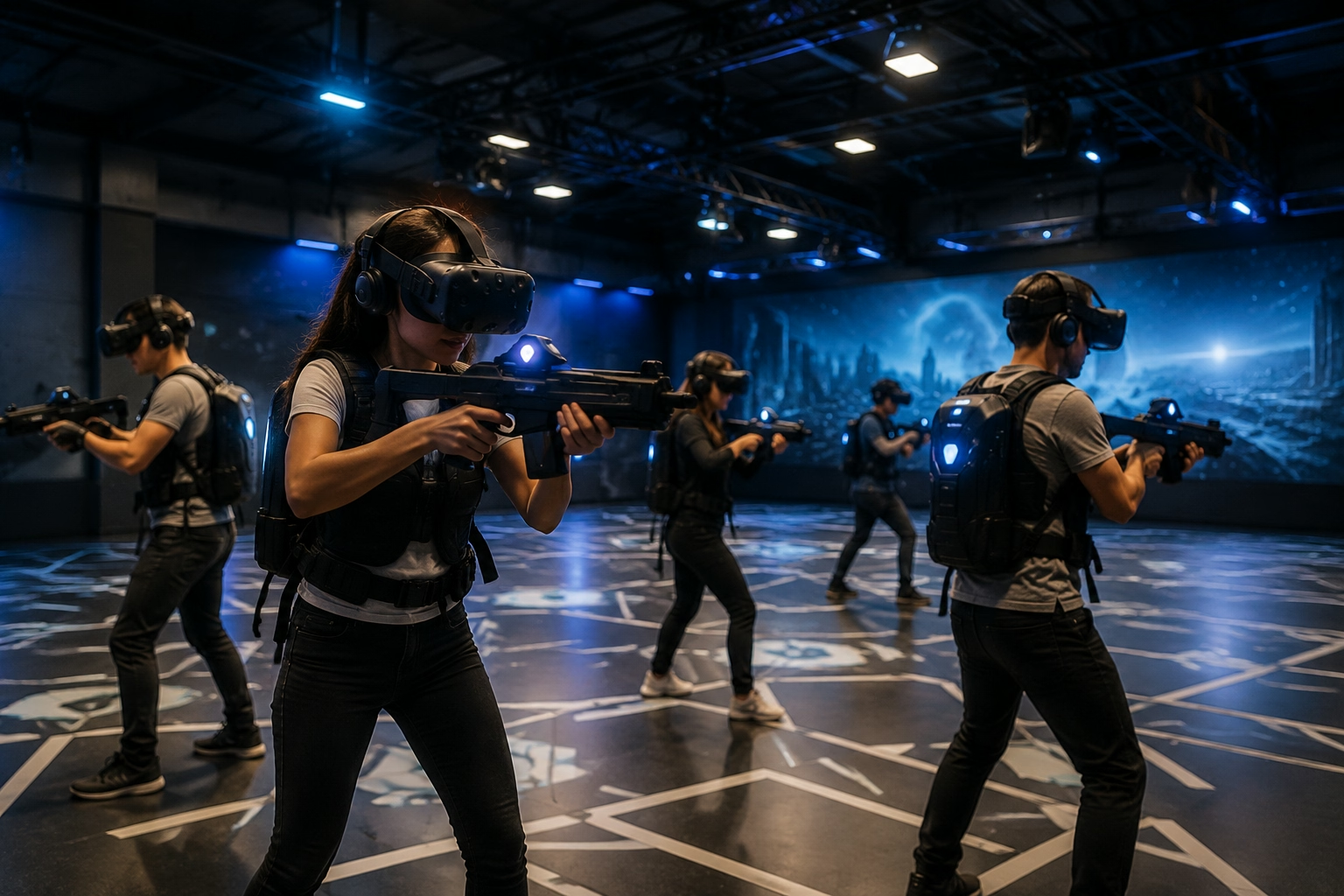
When Zero Latency opened its first free-roam VR arena in Melbourne back in 2015, few predicted that a converted warehouse would become a template for location-based entertainment across Australia. In 2026, that template has evolved into a nationwide network of high-tech arenas where groups of up to eight players strap on wireless headsets, shoulder haptic backpacks, and physically walk through digital worlds without tripping over cables.
The secret is inside-out tracking paired with low-latency 5G networks. Operators in Sydney’s Entertainment Quarter and Brisbane’s Fortitude Valley now run sessions every 15 minutes, with peak-hour slots sold out days in advance. Unlike home VR, which remains a solitary experience for many, free-roam arenas turn virtual reality into a social event—a digital sport that burns calories and builds team chemistry.
Why Location-Based VR Beats the Living Room
Home VR headsets have improved dramatically, yet they still require expensive hardware, large clear spaces, and technical troubleshooting. Location-based venues solve all three problems. A consumer can walk in, pay between AUD 39 and AUD 69 per session, and immediately access a premium experience that would cost thousands to replicate at home.
The business model is equally attractive for operators. According to a 2026 industry report by IBISWorld, Australia’s virtual reality entertainment sector is projected to grow by 12.4% annually, driven by tourism recovery and corporate team-building demand. The full market analysis is available at https://www.ibisworld.com/ .
A Real-World Case: Zero Latency’s Global Pull
Zero Latency now operates in more than 70 venues worldwide, but its Australian roots matter. The company’s Brisbane R&D centre continually updates game libraries, including zombie survival scenarios and sci-fi puzzle rooms. In March 2026, the Melbourne flagship launched Outbreak: Gold Coast, a 40-minute multiplayer campaign set in a post-apocalyptic Surfers Paradise. The game merges Australian landmarks with photorealism, making players feel they are fighting through the Q1 Tower or along Cavill Avenue.
This localised content is a key differentiator. Tourists visiting Sydney can book a VR mission that mirrors the very streets they walked that morning. Such contextual storytelling deepens engagement and generates strong word-of-mouth, which the industry measures through repeat visitation rates. Venues report that 43% of customers return within eight weeks.
The Future of Social VR Hubs
Looking ahead, Australian free-roam arenas are adding scent machines, wind simulators, and full-body tracking to enhance immersion. Operators are also partnering with hotels and cruise lines to bring mobile VR pods to regional areas. The goal is clear: turn virtual reality from a novelty into a mainstream social outing—one that rivals bowling, escape rooms, or laser tag.