
The Alarming Data Behind a Preventable Health Gap
A landmark national study published in The Lancet Global Health has exposed a persistent and deeply concerning disparity in sensory health between Indigenous and non-Indigenous Australians. The research, led by Dr Richard Kha from The Westmead Institute for Medical Research and the University of Sydney, analysed data from more than 4,500 Australians across 30 sites nationwide. The findings reveal that age-standardised vision impairment affects 11.1 per cent of Indigenous participants aged 50 and older, compared with just 3.9 per cent of non-Indigenous Australians. This means Indigenous Australians are almost three times more likely to experience vision loss.
The hearing data paints an equally troubling picture. Among younger Indigenous adults aged 50 to 59, moderate or worse hearing impairment is nearly three times higher than in non-Indigenous Australians of the same age group. For those aged 60 to 69, the rate remains approximately twice as high. These statistics underscore a health equity challenge that demands urgent, culturally informed intervention.
Understanding the Root Causes
The study identified a complex web of factors driving these disparities. Increasing age, diabetes, smoking, and living in remote or very remote areas all correlate with elevated risk. Conversely, protective factors include tertiary education, private health insurance, and having had a recent eye examination. These determinants reveal that sensory health is not merely a clinical issue but one deeply embedded in social, economic, and geographic inequalities.
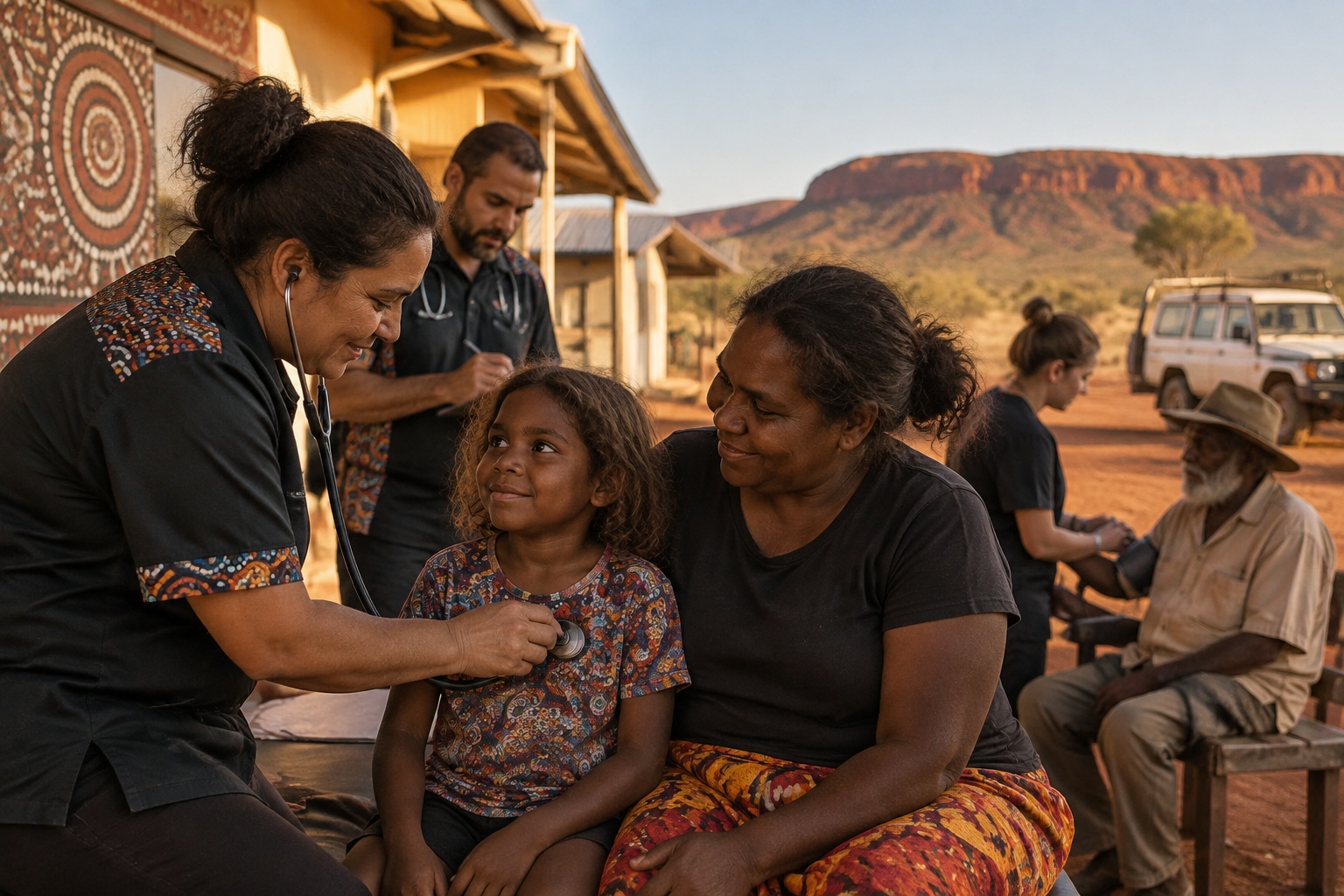
For Indigenous Australians in remote communities, accessing timely eye and ear health services often requires travelling vast distances. The scarcity of specialist services in rural and remote regions creates a bottleneck that delays diagnosis and treatment. This geographic disadvantage compounds existing barriers related to cost, cultural safety, and historical mistrust of mainstream health institutions.
Community-Led Approaches Making a Difference
What sets this research apart is its commitment to Indigenous governance and cultural safety. From its earliest stages, the study incorporated advisory input from Indigenous Elders, Aboriginal Community Controlled Health Organisations, and community representatives. Dr Kha emphasised that research involving Aboriginal and Torres Strait Islander peoples must be guided by cultural safety, community engagement, and respect.
This community-led model is already delivering results in other areas of Indigenous health. The National Aboriginal Community Controlled Health Organisation (NACCHO) is spearheading Australia’s first Aboriginal and Torres Strait Islander community-controlled, sector-led program for acute rheumatic fever and rheumatic heart disease. Since 2022, participating services have identified and treated more than 23,000 skin infections. This demonstrates that when communities lead, outcomes improve.
The Path Forward: Earlier Detection and Culturally Safe Care
Professor Gerald Liew, senior author of the study, stressed that many causes of vision and hearing impairment are preventable or treatable, but access to timely, culturally appropriate care is critical. The research supports earlier detection in younger community members, improved access to eye and ear health services, and community-led approaches to reducing sensory health inequities.
Addressing this crisis requires more than clinical interventions. It demands sustained investment in Aboriginal Community Controlled Health Services, culturally safe health education, and policies that tackle the social determinants of health. As the data makes clear, the gap is not inevitable—it is a consequence of systemic underinvestment and policy neglect.