The Classroom Is No Longer Enough
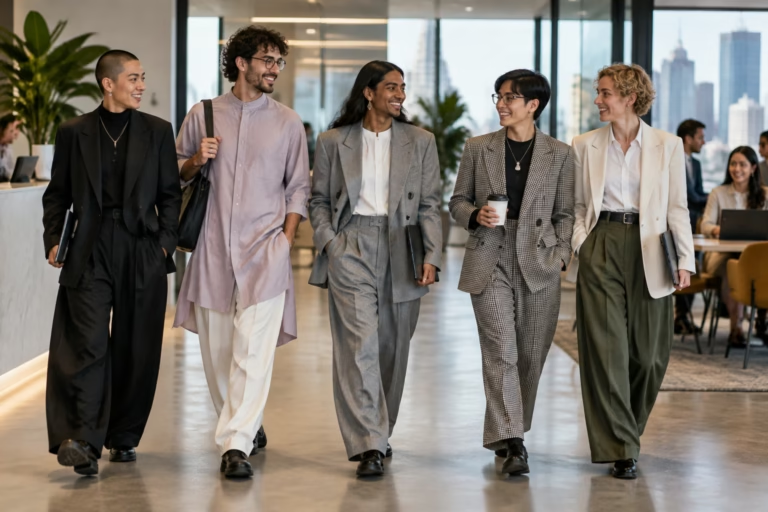
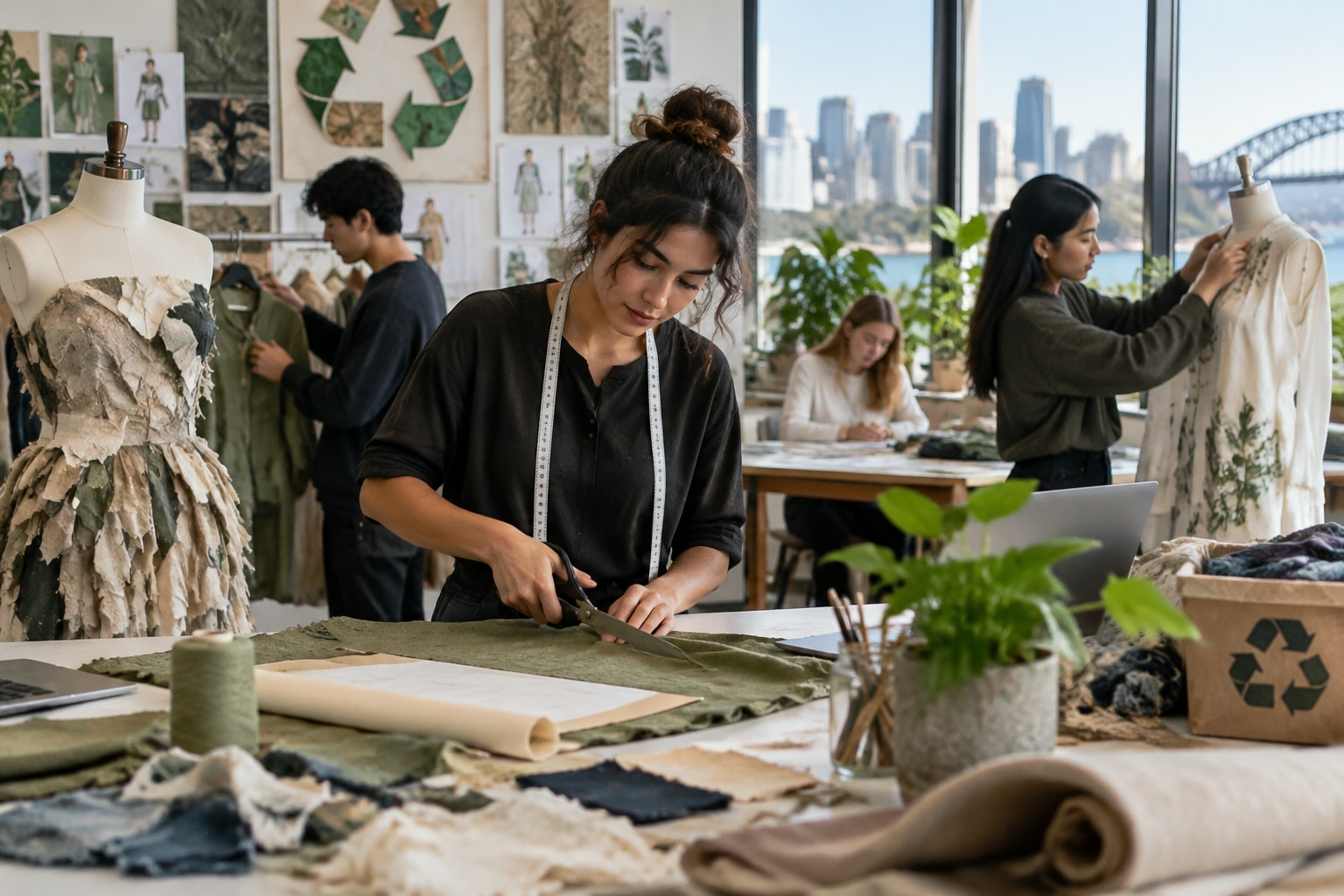
Walk into any leading Australian fashion school in 2026, and you will not find students hunched over sketchbooks in isolation. Instead, you will see them pitching concepts to executives from global textile manufacturers, prototyping denim jackets for international brands, and receiving live briefs from companies that will eventually hire them.
This is the new reality of Australian fashion education: an immersive, industry-embedded model that has fundamentally reshaped how designers are trained. The philosophy is simple — aspiring designers cannot learn the rhythm of the industry from textbooks alone. They must live it.
RMIT Sets the Benchmark for Experiential Learning
RMIT University, ranked #1 in Australia and #19 globally for Art and Design in the QS World University Rankings by Subject 2026, has built its reputation on embedding students directly into the commercial fashion ecosystem. The university’s Associate Degree in Fashion explicitly addresses real-world challenges through industry projects, with students receiving briefs and feedback from professionals at leading Australian brands.
The results speak for themselves. In a recent collaboration, students from RMIT’s Associate Degree in Fashion partnered with Advance Denim, a China-based global textile manufacturer, to create innovative denim jacket samples as part of their third-semester assessment. This was not a simulated exercise — it was a genuine commercial brief with real production implications.
UTS Connects Students to Global Fashion Capitals
The University of Technology Sydney (UTS) has developed a similarly rigorous approach through its Bachelor of Design in Fashion and Textiles. The course’s close industry ties provide exclusive opportunities to work on real projects with industry leaders and textile studios such as Liberty London, Australian Wool Education Trust, and Calcoup Knitwear.
These partnerships are not merely resume decorations. UTS graduates have gone on to work with some of the most recognisable names in global fashion, including Alexander McQueen, Kenzo, Abercrombie and Fitch, and Helmut Lang. The university’s Global Studio elective further allows students to develop their learning in an international context, preparing them for careers that transcend borders.
The Industry Partnership Multiplier Effect
The significance of these collaborations extends far beyond individual student portfolios. According to the National Manufacturing Strategy for Australian Fashion and Textiles 2026-2036, launched by the Australian Fashion Council and R.M.Williams, more than 300 stakeholders contributed over 1,000 proposed initiatives to rebuild the sector’s workforce capabilities.
The strategy explicitly identifies securing “the workforce of the future” as one of its three strategic pillars, noting that the median age of Australian textile manufacturers is 57 — a demographic cliff that demands urgent action. Fashion schools are directly answering this call by producing graduates who understand not just design, but production systems, supply chains, and commercial viability.
What This Means for Aspiring Designers
For students considering a career in fashion, the message is clear: the era of the purely artistic fashion degree is over. The most successful programs are those that treat industry integration not as an add-on, but as the core pedagogical framework.
The partnerships between Australian fashion schools and the industry represent a fundamental shift in how creative education operates. By the time these students graduate, they have already navigated real deadlines, real budgets, and real client expectations. They are not just designers — they are professionals.