The Numbers Behind the Shift
Australia’s apparel industry is witnessing a structural realignment that few analysts saw coming a decade ago. The country’s customisable clothing market was valued at USD 0.93 billion in 2024 and is now projected to reach USD 2.03 billion by 2033, expanding at a compound annual growth rate of 9.16% between 2026 and 2033, according to Deep Market Insights’ 2026 Australia Customisable Clothing Market Report . This is not a niche curiosity. It is a measurable migration of consumer spending away from pre-made, mass-produced inventory and toward garments that are manufactured only after a transaction is confirmed.
Why Australian Shoppers Are Choosing Made-to-Order
The behavioural drivers are practical rather than purely ideological. Australians have become acutely aware of the fit problem: standard sizing assumes a body that most people do not have. Made-to-order models, particularly those supported by modular apparel and custom-fit platforms, eliminate the guesswork that fuels online return rates. The same Deep Market Insights report identifies modular apparel as the fastest-growing personalisation segment, signalling that consumers want garments they can adapt rather than garments they must adapt to .
This shift is reinforced by broader e-commerce momentum. Australia’s online women’s clothing sector alone is valued at AU$2.3 billion in 2026, with nearly 3,946 businesses operating in the space and a five-year CAGR of 6.4% . Made-to-order operators are capturing a disproportionate share of that growth because they carry almost no dead stock risk.
The Economics That Favour On-Demand Production
Traditional retail economics punish uncertainty. Brands that commit to offshore minimum order quantities routinely overproduce by up to 30% to secure favourable unit pricing, a structural inefficiency documented in Seamless benchmark data . Made-to-order reverses the logic: production is triggered by demand, not forecast. For emerging labels and established independents alike, this means working capital is deployed against confirmed revenue rather than speculative inventory. The result is a leaner cost base and a product mix that reflects real consumer preference in real time.
The Retail Experience Is Changing With It
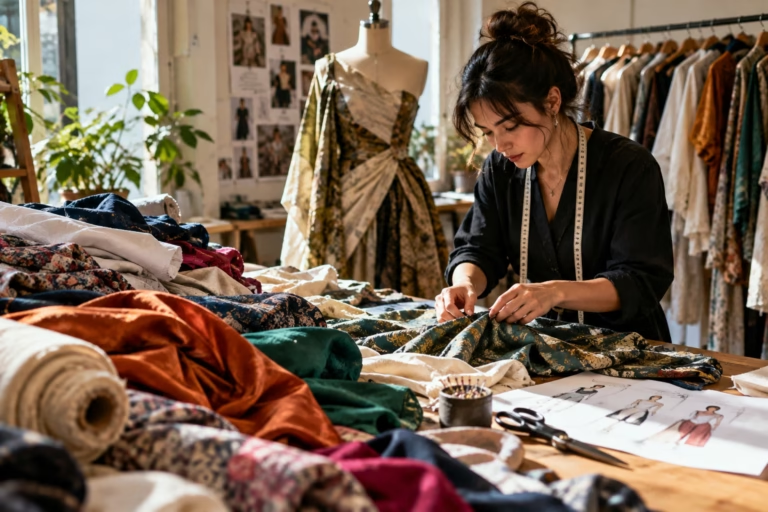
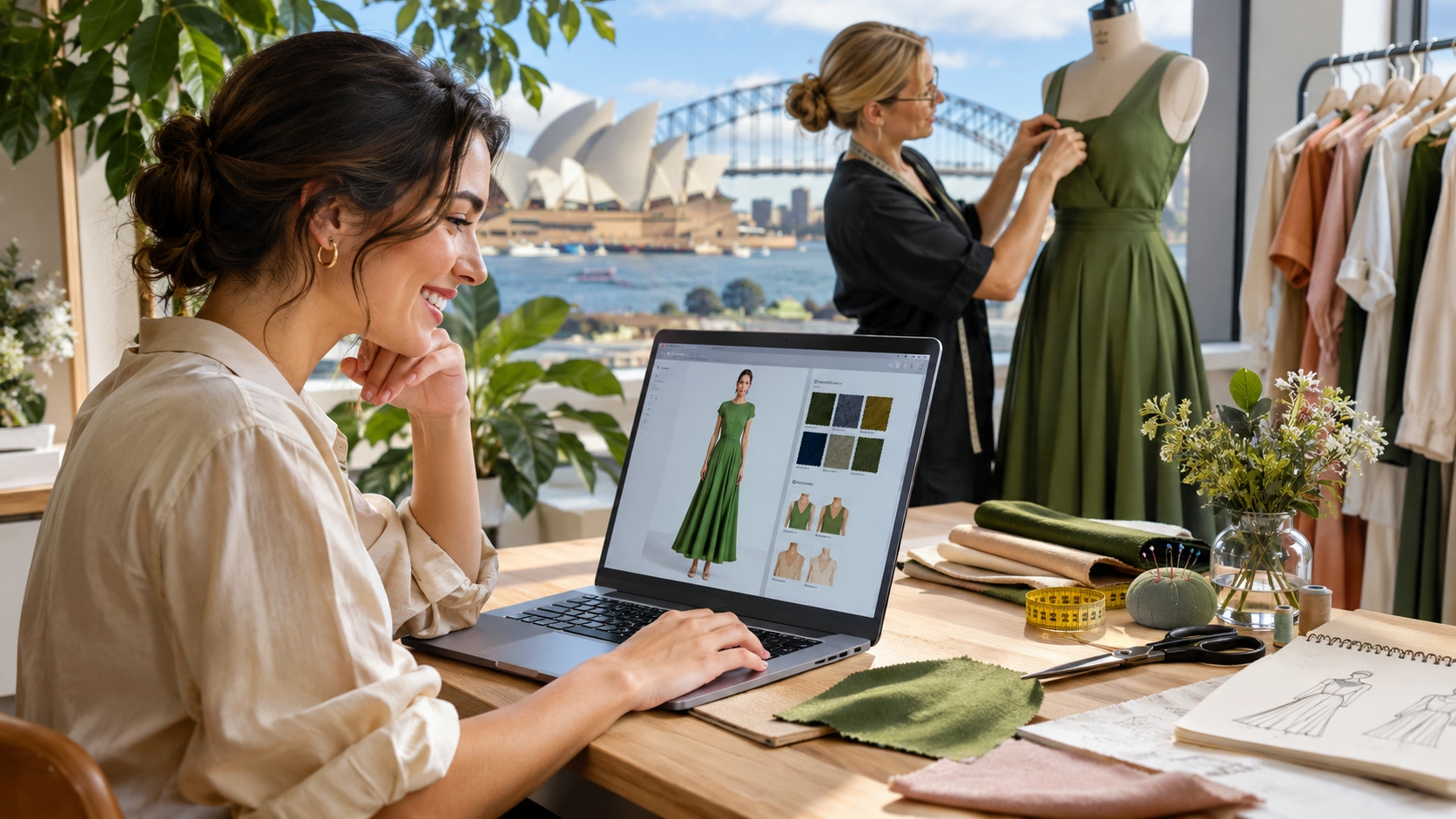
Made-to-order is also reshaping how Australians interact with brands. The transaction is no longer a grab-and-go exchange; it is a short collaborative process in which the customer’s measurements, fabric choice, and fit preferences enter the production brief. Brands that master this experience are building loyalty that discount-driven mass retailers struggle to replicate. The waiting period — typically days to a few weeks — has become part of the value proposition rather than a friction point, particularly for shoppers who have grown disillusioned with the disposability of fast fashion.
A Market Still in Its Inflection Phase
The 9.16% growth trajectory through 2033 suggests that made-to-order fashion in Australia is not a pandemic-era anomaly but a durable market evolution . As personalisation technology matures and local production networks expand, the addressable market will broaden beyond early adopters into mainstream wardrobe categories. The brands positioning themselves now are not simply selling clothes. They are building the infrastructure for a demand-driven apparel economy.