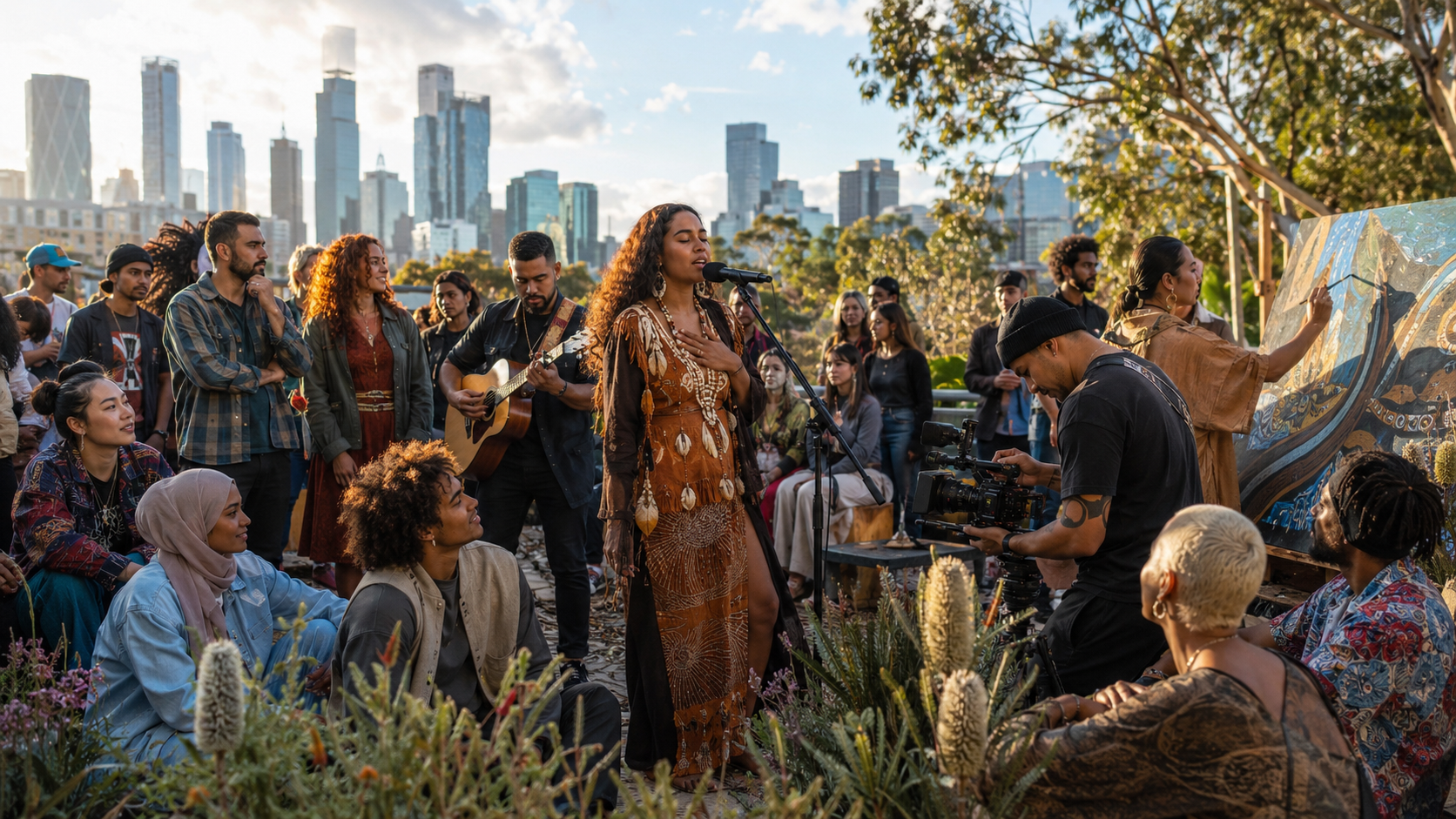
Australia’s music culture is experiencing one of its most significant transformations since the rise of commercial radio. Streaming services and social media have changed not only what Australians listen to, but also how artists write, release, promote, and monetise their work.
Listeners can now move instantly between Australian indie rock, Korean pop, American hip-hop, Nigerian Afrobeats, British electronic music, Latin pop, and First Nations music. This access has created a more diverse listening environment, but it has also intensified competition for local artists.
Global Platforms Create New Opportunities
In previous decades, Australian musicians often relied on radio airplay, record labels, television appearances, live venues, and physical sales. Those channels remain relevant, but digital platforms now influence discovery at every stage of an artist’s career.
A song can gain attention through a Spotify playlist, a dance challenge, a fan-made video, a television placement, or a brief sound used repeatedly on TikTok. This allows independent artists to reach international listeners without following a traditional release model.
Performers such as Tame Impala, Troye Sivan, Kylie Minogue, Sia, Flume, and The Kid LAROI have demonstrated the international potential of Australian music across pop, electronic, alternative, and hip-hop markets.
The official ARIA Charts provide a continuing reference point for music consumption in Australia, including the performance of albums and singles in a market dominated by both domestic and international releases.
The Pressure of Algorithmic Visibility
Digital access does not guarantee equal opportunity. Recommendation systems often reward songs that attract immediate engagement, fit popular playlists, or generate repeatable short-form content.
This can influence songwriting. Some tracks are designed with shorter introductions, memorable opening lines, or highly shareable sections. Artists may also feel pressure to maintain a constant online presence even when their primary skill is music rather than content creation.
For Australian performers, geographical distance is less restrictive than before, but international touring, promotion, and audience development can still be expensive. Online popularity may create visibility without providing stable income.
Global Genres Become Australian Stories
International genres are increasingly being adapted through Australian experiences. Local hip-hop artists discuss suburbia, migration, race, policing, family expectations, and regional identity. Electronic musicians combine festival culture with experimental production. Artists from African, Asian, Middle Eastern, Pacific, and European diasporas incorporate multiple languages and musical traditions.
First Nations performers have also expanded the meaning of mainstream Australian music. Artists such as Baker Boy, King Stingray, Thelma Plum, and Electric Fields have brought Indigenous languages, histories, and contemporary experiences into popular cultural spaces.
Live Music Remains Social Infrastructure
Despite the growth of streaming, live venues remain essential. Pubs, clubs, community festivals, theatres, and regional events help musicians develop performance skills and build loyal audiences.
When venues close because of rising costs, noise disputes, or changing consumer habits, the impact is cultural as well as economic. Fewer stages mean fewer opportunities for emerging artists and less diversity in the music ecosystem.
Australia’s musical identity is now global, digital, and multicultural. The central challenge is ensuring that international access strengthens local creativity rather than making Australian artists invisible within an unlimited global catalogue.