
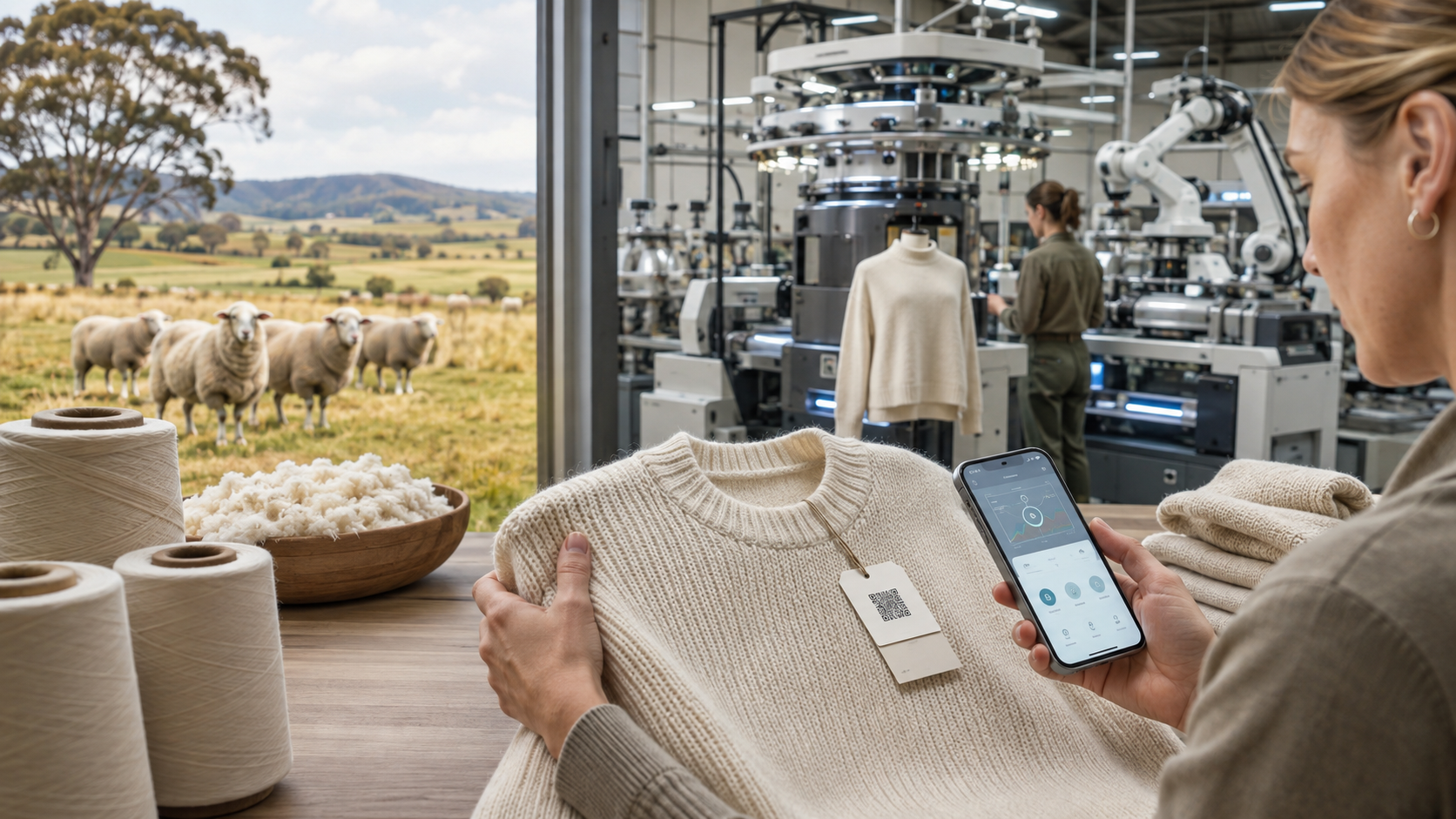
The Merino Advantage Meets Blockchain Traceability
Australia produces over 90% of the world’s fine apparel wool, and in 2026 that natural advantage is being amplified by unprecedented supply-chain transparency. Country Road’s traceable wool collection, verified through forensic science, allows customers to scan a QR code and follow the fibre from a specific farm in the New England region to the finished garment. This model has triggered a domino effect: major retailers now demand full visibility of raw materials, pushing the entire textile sector to adopt digital product passports. According to the Australian Bureau of Statistics’ latest manufacturing release (2024‑25 financial year), the textile, clothing and footwear subdivision recorded a 4.2 per cent lift in value added, with premium knitwear and traceable wool lines leading the charge. ABS Manufacturing Industry data, 2026
Advanced Knitting and Digital Fabrication Hubs
Melbourne and Sydney have become epicentres for seamless, whole-garment knitting technology. Domestic mills are importing Japanese and Italian flatbed knitting machines that can produce a finished jumper in under an hour, eliminating cut-and-sew waste. One Melbourne-based manufacturer recently delivered a 10,000-unit order for a European luxury label entirely onshore, something unthinkable a decade ago. The process begins with 3D digital prototyping: designers tweak stitch density, ribbing and silhouette on a screen, then send files directly to the knitting robot. This integration slashes sample turnaround from weeks to days and cuts material waste by up to 30 per cent.
Onshore Manufacturing Revival and Government Support
The Modern Manufacturing Initiative and the National Reconstruction Fund have channelled over AU$100 million into textile innovation since 2025. Grants are accelerating the installation of laser cutting, robotic sewing arms and water‑free dyeing systems. As a result, a string of micro-mills is emerging in regional centres such as Geelong and Bendigo, creating skilled jobs and shortening supply chains. Brands that previously produced 95 per cent of their goods overseas are now targeting 25 per cent local production by 2028, motivated by both carbon-reduction mandates and a consumer appetite for “Made in Australia” labels. The convergence of native wool, digital fabrication and intentional onshore investment is turning a once-shrinking industry into a showcase of high-value, low-impact fashion.