
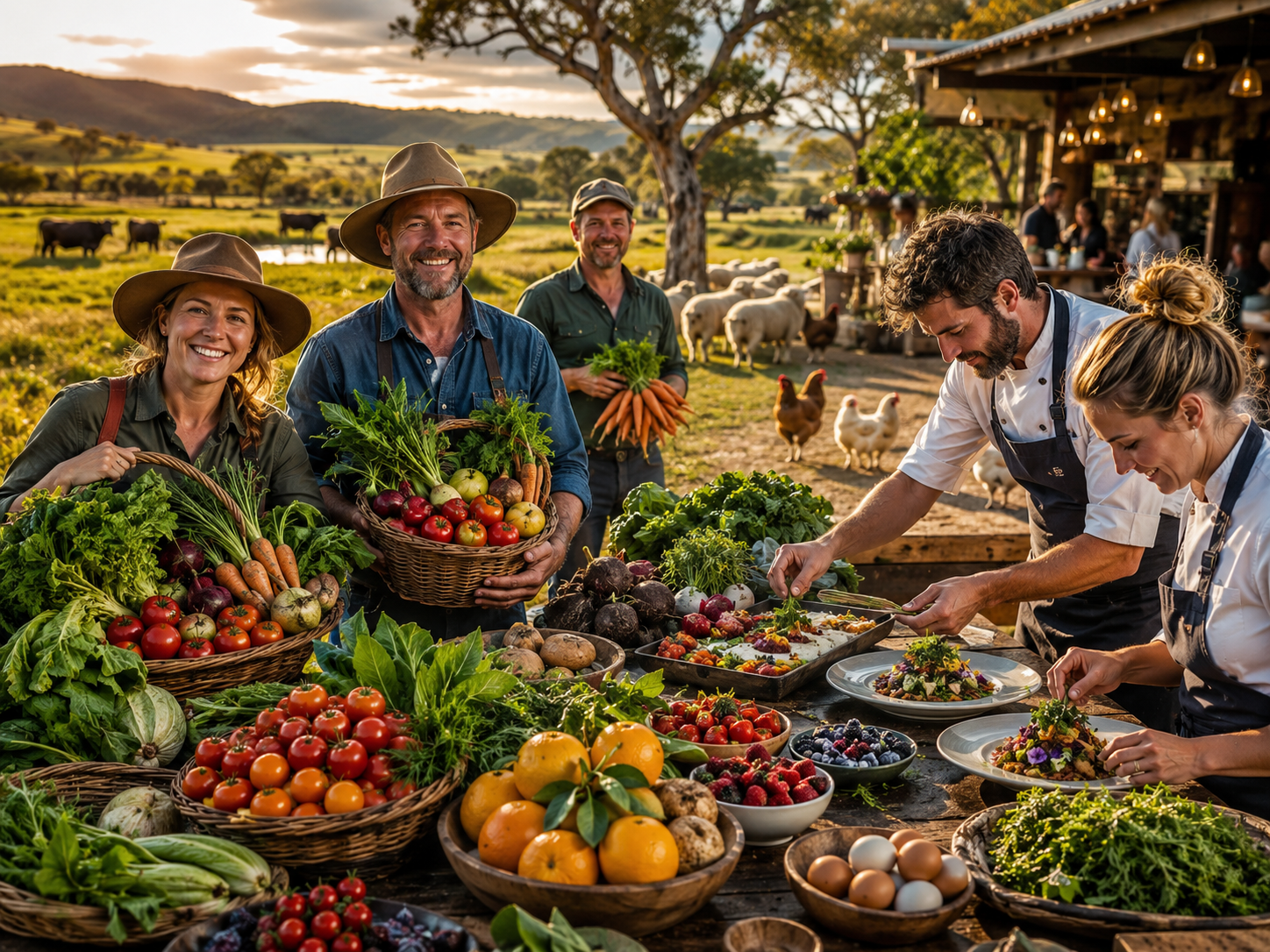
Australia’s culinary landscape has increasingly embraced the importance of local agriculture, recognizing that the foundation of exceptional cuisine lies in the quality of ingredients sourced from nearby farms. Across the country, from the vineyards of South Australia to the vegetable farms of New South Wales, farmers play a pivotal role in shaping culinary experiences by providing fresh, seasonal produce that defines the flavors of modern Australian cuisine.
Local farmers bring not only fresh fruits, vegetables, and herbs but also a profound understanding of sustainable practices. By reducing reliance on long supply chains, farmers contribute to lower carbon footprints and ensure that produce reaches kitchens at peak ripeness. This freshness translates directly into taste, allowing chefs to craft dishes that are vibrant and nutritionally rich. Farmers’ markets in cities like Melbourne and Sydney have become hubs for chefs and home cooks alike to access ingredients that are both locally grown and of superior quality.
Beyond fruits and vegetables, livestock farmers contribute significantly to Australia’s culinary diversity. Grass-fed beef, free-range poultry, and sustainably raised lamb provide chefs with ethically sourced protein that complements the nation’s evolving palate. Australian culinary trends increasingly favor these responsible sourcing methods, reflecting consumer awareness about animal welfare and environmental sustainability.
Moreover, local produce fosters a sense of community and connection to the land. Chefs often collaborate directly with farmers, tailoring menus around seasonal offerings and creating dishes that reflect the agricultural calendar. This collaboration not only supports the local economy but also highlights the unique regional flavors that define Australia’s varied culinary regions—from tropical fruits in Queensland to hearty root vegetables in Tasmania.
Innovative culinary movements, such as the farm-to-table approach, have further amplified the influence of local farmers. Restaurants are now promoting the origin of each ingredient, emphasizing transparency and the narrative behind the food. Customers increasingly value knowing the story of their meal, from farm to fork, which strengthens the role of farmers as integral contributors to Australia’s gastronomic identity.
Ultimately, the symbiotic relationship between farmers and chefs ensures that Australian cuisine continues to evolve while remaining rooted in local traditions. By prioritizing quality, seasonality, and sustainability, farmers provide the essential building blocks for a cuisine that is globally recognized yet deeply connected to its land and community.