Australia’s food identity is entering a new era as younger generations of Asian Australians transform traditional migrant cuisine into innovative culinary experiences. Unlike earlier migrant generations that often focused on preserving familiar dishes from their home countries, second-generation Asian Australians are blending cultural heritage with contemporary Australian influences.
This new movement is creating a food landscape where traditional Asian flavors meet modern techniques, local ingredients, and global culinary trends.
From Migrant Traditions to Contemporary Australian Cuisine
The first generations of Asian migrants often used food as a connection to their homeland. Restaurants and family kitchens became spaces where recipes, languages, and cultural traditions were preserved.
However, children of these migrants grew up between two cultural environments. They inherited Asian cooking traditions from their families while also experiencing Australia’s diverse food culture. This unique background has allowed them to create new interpretations of Asian cuisine.
Many young chefs and food entrepreneurs are now introducing dishes that reflect both identities. Instead of simply reproducing traditional recipes, they explore questions about heritage, belonging, and cultural evolution through food.
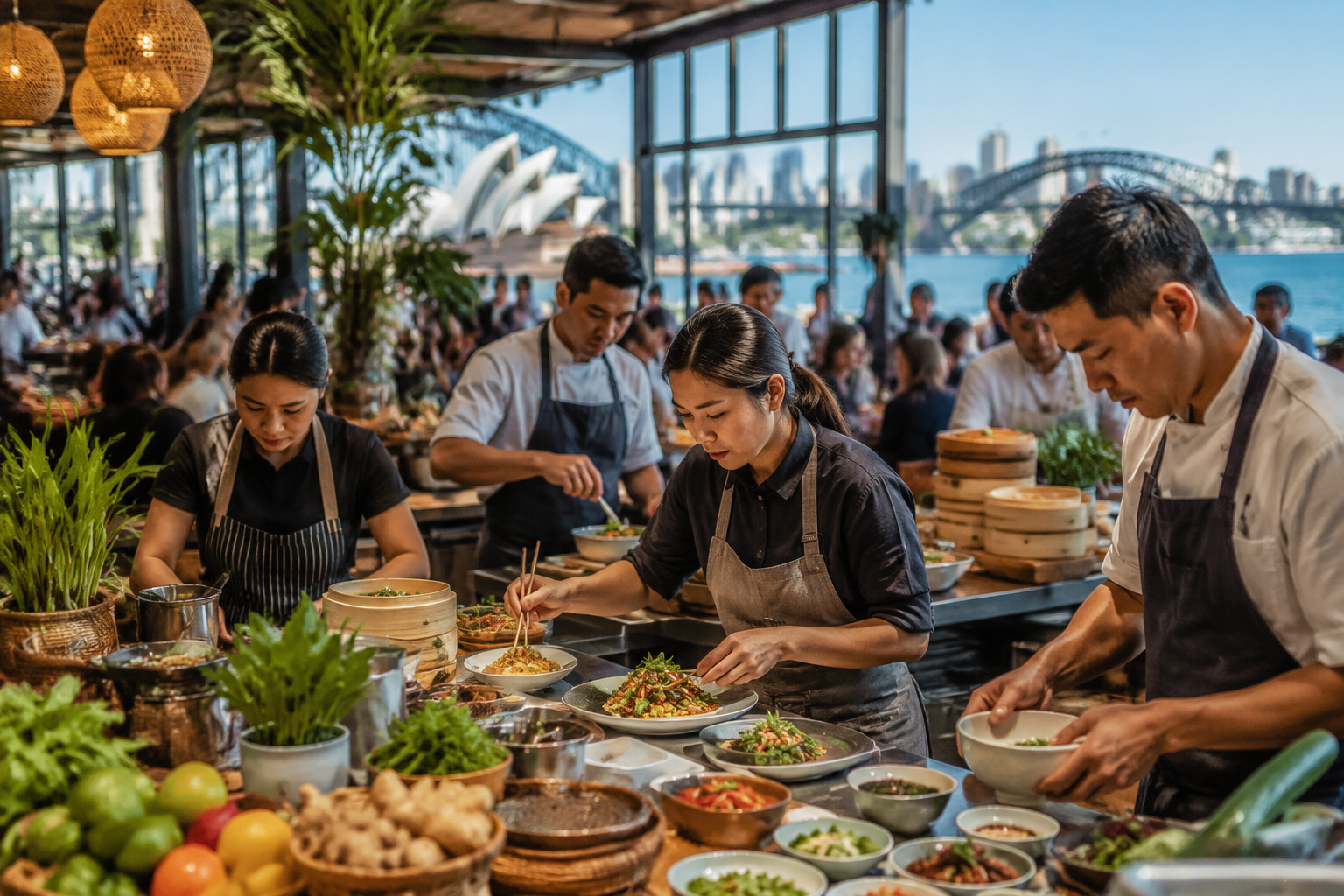
For example, a modern Asian Australian restaurant may combine Japanese cooking methods with Australian seafood, Vietnamese flavors with native ingredients, or Korean fermentation techniques with contemporary dining concepts.
The Rise of Asian Australian Chefs and Culinary Creators
The increasing visibility of Asian Australian chefs demonstrates how migration has influenced professional kitchens across the country. These chefs are not only introducing Asian flavors but also changing perceptions of what Australian cuisine can represent.
Restaurants in cities such as Sydney and Melbourne increasingly feature chefs with Asian heritage who create menus inspired by personal migration stories.
A notable trend is the use of storytelling in restaurants. Many chefs explain the cultural background behind dishes, allowing customers to understand the historical journey behind each ingredient and recipe.
The Australian food industry has recognized the importance of diversity in culinary innovation. According to the Australian Government Department of Agriculture, Fisheries and Forestry, Australia’s food and beverage sector benefits from diverse cultural influences and strong international connections. Industry information is available at: https://www.agriculture.gov.au
Social Media Accelerating Asian Food Discoveries
Digital platforms have significantly expanded the influence of Asian cuisine in Australia. Instagram, TikTok, and YouTube have allowed restaurants and independent food creators to introduce dishes to millions of potential customers.
Young Asian Australian creators frequently share family recipes, cooking techniques, and restaurant recommendations online. These platforms have helped transform lesser-known regional cuisines into popular food trends.
For instance, Korean street food, Japanese desserts, Taiwanese bubble tea, and Southeast Asian snacks have gained widespread popularity among Australian consumers through online exposure.
Social media has also helped migrant-owned businesses reach younger audiences without relying only on traditional advertising methods.
Food as a Representation of Identity and Cultural Connection
For many Asian Australians, food represents more than taste. It reflects personal history, family relationships, and cultural identity.
A dish prepared from a grandmother’s recipe may represent migration journeys, while a redesigned version of traditional cuisine may represent adaptation and confidence in multicultural identity.
This perspective has changed how Australians view ethnic food. Asian cuisine is increasingly recognized not simply as international cuisine but as part of Australia’s own evolving national culture.
The Future of Asian Influence in Australian Dining
The next generation of Asian Australian chefs and entrepreneurs is likely to continue expanding the boundaries of Australian cuisine. Their approach combines respect for tradition with willingness to experiment.
Future food trends may include more sustainable Asian-inspired cooking, greater use of regional Asian ingredients, and deeper collaboration between migrant communities and local producers.
The influence of Asian migration has therefore entered a new stage. It is no longer only about introducing traditional dishes to Australia but about creating a new culinary identity shaped by multiple cultures.