Two powerful currents are reshaping the Australian children’s fashion market in 2026: the mainstreaming of certified organic textiles and the widespread embrace of gender-neutral styling. Far from being niche preferences, these factors now dominate the conversation among parents and product developers alike. Statista’s 2026 market analysis places the Australian children’s apparel sector at US$2.9 billion in revenue, with eco-conscious and inclusive segments posting growth rates that easily outstrip the broader market.
The Organic Textile Takeover
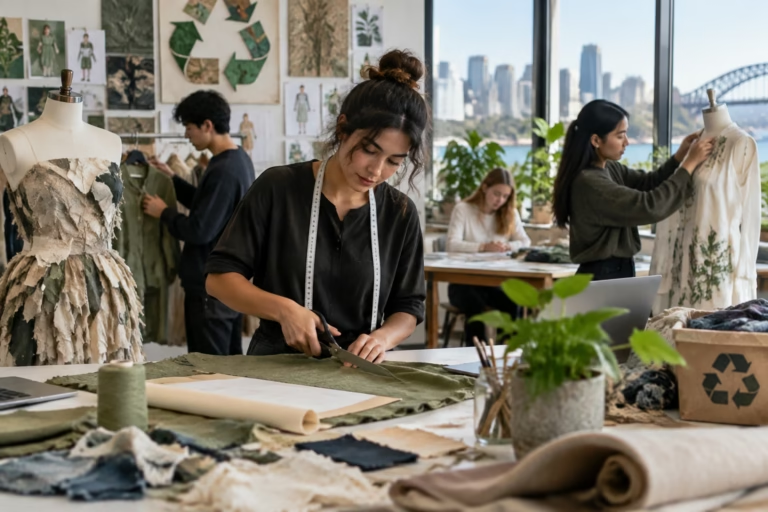
Organic cotton, bamboo, and lyocell have moved from the margins to the middle of the kidswear aisle. Parents today are deeply aware of the link between conventional cotton farming and pesticide exposure, and they are voting with their wallets. Purebaby, the Australian pioneer in organic baby and children’s wear, recorded a first-quarter sales spike of 26% in 2026 compared to the same period last year, a jump the company attributes to its uncompromising GOTS certification. Similarly, Bonds introduced a “Pure Cotton Organics” kids’ sleepwear line that sold out twice within four months of launch. These fabrics are no longer seen as a luxury upgrade; they have become a baseline expectation among millennial and Gen Z parents who research clothing composition tags as carefully as they read nutrition panels.
Breaking the Pink-and-Blue Binary
Parallel to the organic wave, the rigid gender segmentation that once defined children’s departments is crumbling. Australian mothers and fathers are actively seeking garments that any child can wear, regardless of sex. This stems from both a values-based desire to avoid stereotyping and a practical financial calculation: unisex wardrobes extend the hand-me-down lifecycle within families. Huxbaby, a Melbourne label known for minimalist, non-gendered designs, reported a 33% surge in online sales after dropping its 2026 winter collection, which featured animal prints and abstract patterns devoid of gendered cues. Major chains like Target and Big W have also reconfigured their kids’ sections, swapping “Boys” and “Girls” signage for age-based groupings and “Graphic” vs. “Plain” filters.
How Brands Are Adapting Their Strategies
These twin forces are forcing established Australian brands to overhaul not only their product lines but also their marketing. Country Road Children now promotes its school-friendly basics with images of boys and girls sharing the same rugby shirts and chinos, while Wandering Folk’s mini range uses storytelling around outdoor exploration rather than gender-specific aspirations. Even fast-fashion players are recalibrating. Cotton On Kids has committed to making 60% of its core range from sustainably sourced materials by mid-2026, a target that includes gender-neutral denim and basic tees.
The Resale Revolution and Circular Design
The organic and gender-neutral movements also feed perfectly into Australia’s booming resale economy. When fabrics are durable and styles are unisex, a garment can easily serve three or four children before reaching its end of life. Platforms such as Depop and local community groups on Facebook are brimming with “barely worn” organic cotton pieces, a trend that is both reducing household spending and lowering fashion’s environmental footprint. Design-forward labels like Kip&Co Kids are actively encouraging this cycle by designing removable internal tags and reinforcing seams to withstand multiple users.
What This Means for the Future
For Australian parents in 2026, the ideal kids’ garment is a story of purity, inclusivity, and endurance. It is a piece that feels soft on eczema-prone skin, avoids gendered stereotypes, and survives the rough and tumble of toddlerhood. For brands, the message is equally clear: organic certifications and non-gendered design are no longer differentiators—they are prerequisites for relevance in a market where every dollar spent is a values statement.