The Arrival of a European Heavyweight
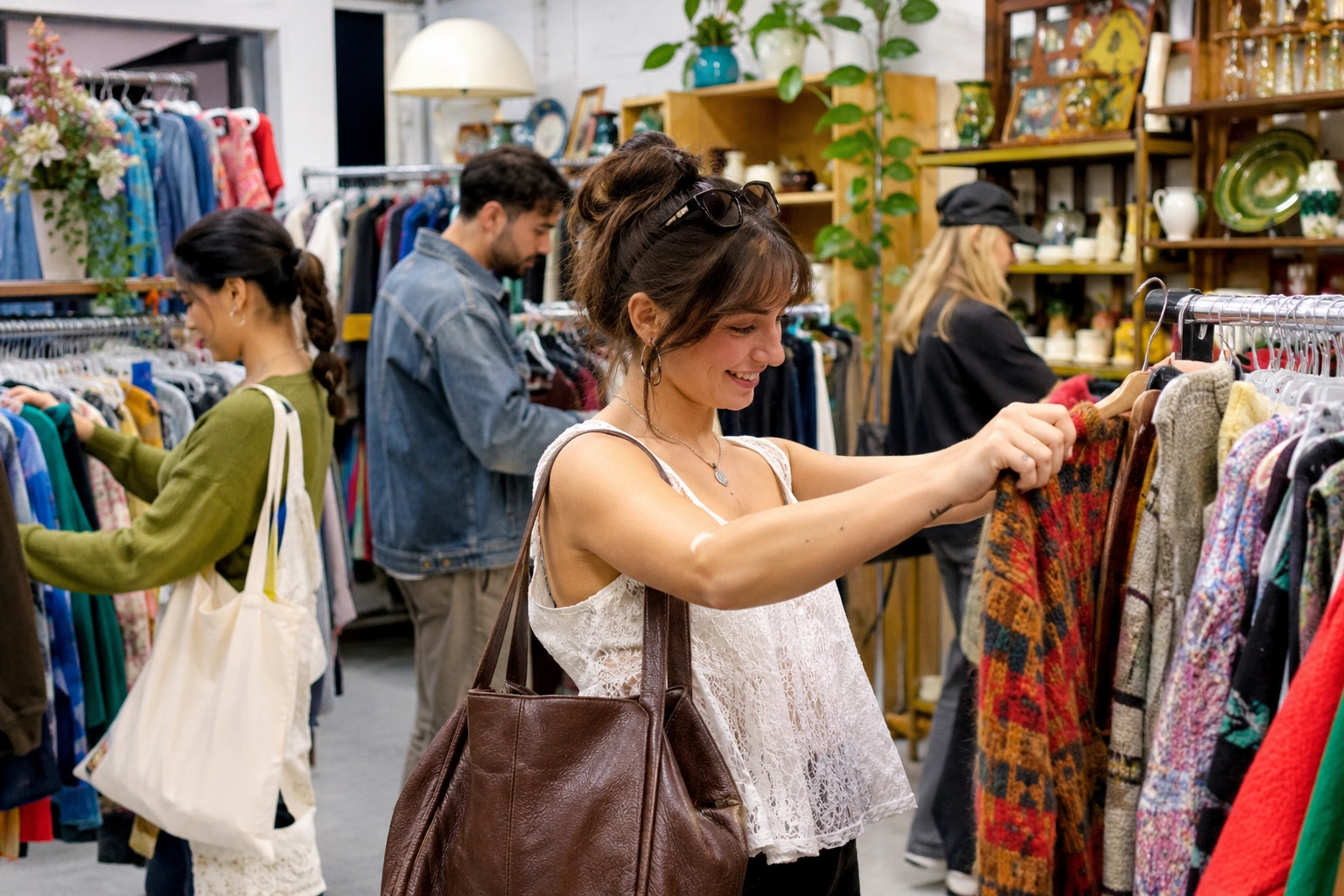
The Australian pre-loved fashion market experienced a seismic shift on July 1, 2026, when European second-hand marketplace Vinted officially launched its operations Down Under. Partnering exclusively with Australia Post for a three-year term, Vinted has eliminated selling fees for local users, a move designed to aggressively capture market share from established players like Depop and eBay . This launch is not merely a new app on the market; it represents a structural maturation of the recommerce sector in Australia, which Australia Post’s 2026 eCommerce Report values as a market projected to reach US$6.75 billion by 2029 .
Beyond Cost-of-Living: The Decluttering Economy
While economic pressures often dominate the narrative around second-hand shopping, Vinted’s proprietary research offers a nuanced perspective on Australian consumer behaviour. According to a June 2026 survey of over 1,000 Australians, the primary driver for selling pre-loved items is decluttering (67%), well ahead of cost-of-living pressures (42%) . This suggests that the circular fashion economy in Australia is fueled as much by a desire for spatial and psychological clarity as it is by financial necessity. Nearly half of the respondents (46%) indicated that a cluttered home is a genuine source of stress, with clothing being a significant contributor—three in five Australians admit to having unworn clothes taking up space . This data underscores a pivotal shift: resale platforms are increasingly being positioned as essential home-management utilities rather than just budget-friendly shopping alternatives.
The Logistics Backbone: Trust and Convenience
A critical barrier to the adoption of peer-to-peer fashion resale has historically been logistical friction—shipping costs, drop-off convenience, and buyer trust. Vinted’s strategic partnership with Australia Post directly addresses these pain points. Sellers receive prepaid shipping labels and can drop parcels at any Post Office or Parcel Locker, while buyers are protected by a Buyer Protection fee that covers lost, damaged, or misdescribed items . Gary Starr, Executive General Manager at Australia Post, noted that peer-to-peer selling depends entirely on a process that is simple, reliable, and easy to access . By integrating the national postal network into the app’s workflow, Vinted is effectively lowering the barrier to entry for casual sellers who might otherwise be deterred by the complexities of courier services.
Implications for the Local Circular Economy
The entry of Vinted intensifies competition in a market already witnessing significant consolidation. eBay’s acquisition of Depop in February 2026 for US$1.2 billion signaled that global platforms view Australian resale as a high-growth vertical . For Australian consumers, this competition is likely to yield benefits in the form of reduced fees, improved user interfaces, and better buyer protections. However, it also raises questions about market saturation and the potential for overconsumption. As the pool of available second-hand inventory grows, the onus remains on platforms and consumers alike to ensure that the circular economy genuinely extends the lifecycle of garments rather than simply accelerating the velocity of disposable fashion .