Australian food is often associated with meat pies, barbecue, lamingtons, and seafood, but long before these dishes became popular, the continent already had one of the world’s oldest food cultures. For tens of thousands of years, Aboriginal and Torres Strait Islander peoples developed deep knowledge of plants, animals, seasons, and landscapes. Many of these foods were never truly forgotten by Indigenous communities, but they were often ignored or pushed aside in mainstream Australian cooking. Today, interest in native ingredients is growing again, opening the door to ancient recipes and traditional food wisdom.
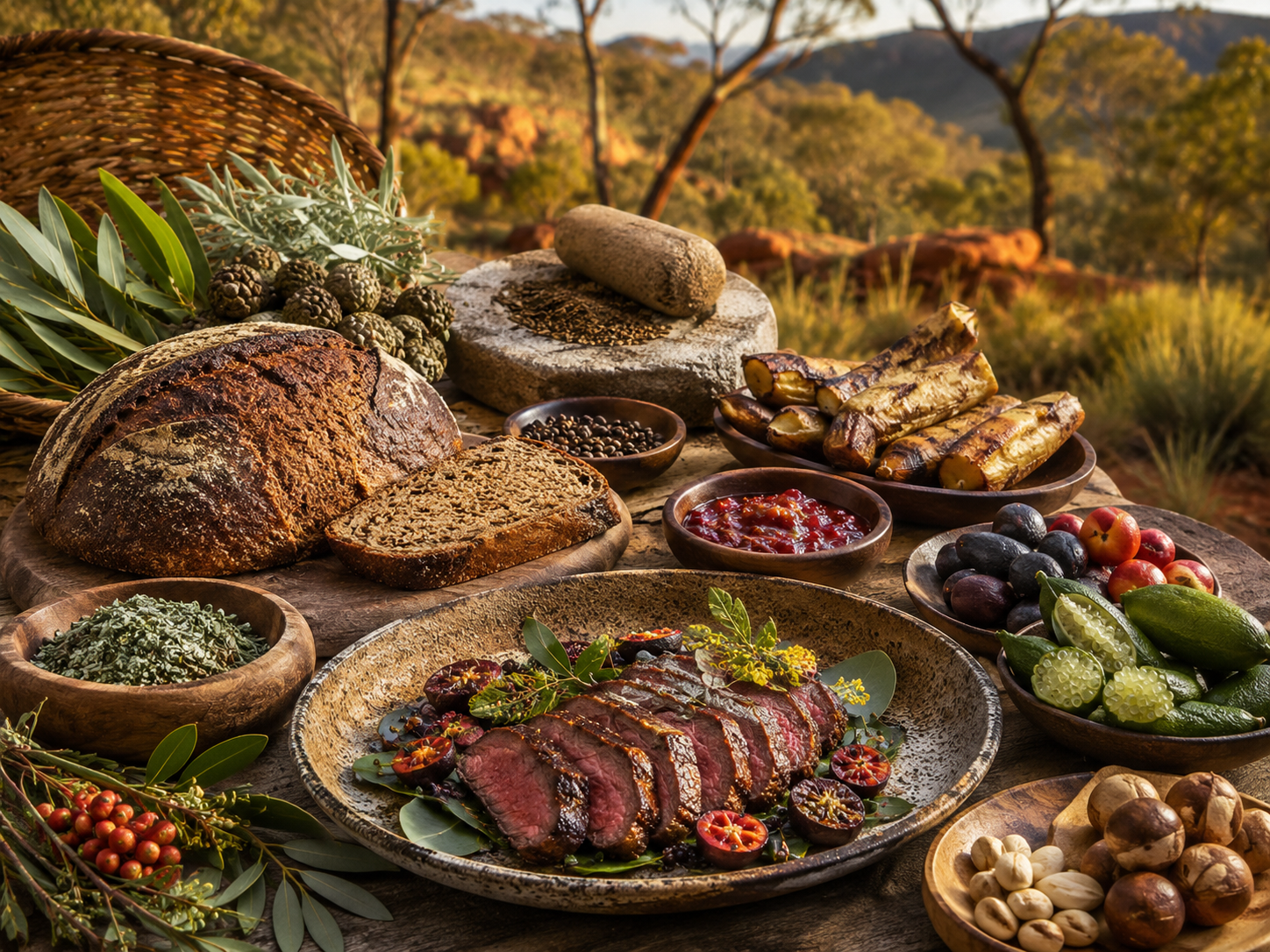
One of the most important parts of old Australian food culture is the use of native plants. Wattleseed, for example, was traditionally ground into flour and used to make simple breads or cakes cooked on hot stones. When roasted, wattleseed has a nutty, coffee-like flavour, making it useful in modern breads, desserts, and drinks. Murnong, also known as yam daisy, was another key food. Its small tubers were roasted, baked, or eaten after careful preparation. In some regions, murnong was once so common that it formed a major part of daily meals.
Native fruits also played an important role. Quandong, sometimes called native peach, has a sharp, tangy taste and was eaten fresh, dried, or cooked into sauces. Kakadu plum, one of the richest natural sources of vitamin C, was valued as both food and medicine. Finger lime, with its tiny citrus pearls, is now popular in fine dining, but it has long been part of Indigenous food knowledge. These fruits show how ancient Australian ingredients can fit naturally into modern recipes without losing their cultural roots.
Traditional cooking methods were simple but highly effective. Foods were roasted over coals, baked in earth ovens, smoked, dried, or ground by hand using stones. Fish and eels were caught using traps and waterways that showed advanced environmental understanding. Bunya nuts, gathered from bunya pine trees, were roasted or ground into paste. These gatherings were not only about eating; they were also social and cultural events where knowledge, stories, and responsibilities were shared.
Reviving ancient Australian recipes should be done with respect. Native ingredients are not just trends or exotic flavours. They belong to living cultures with deep connections to land. A modern dish such as wattleseed damper, kangaroo seasoned with native pepperberry, roasted murnong with saltbush, or quandong compote can be delicious, but it should also remind people of the knowledge behind the food.
To bring these foods back responsibly, consumers can support Indigenous-owned businesses, learn the correct names of ingredients, and understand where they come from. Chefs and home cooks can use native foods thoughtfully rather than treating them as decorations. The revival of Australia’s ancient recipes is not only about taste. It is also about memory, respect, sustainability, and recognising the oldest continuing food traditions on Earth.