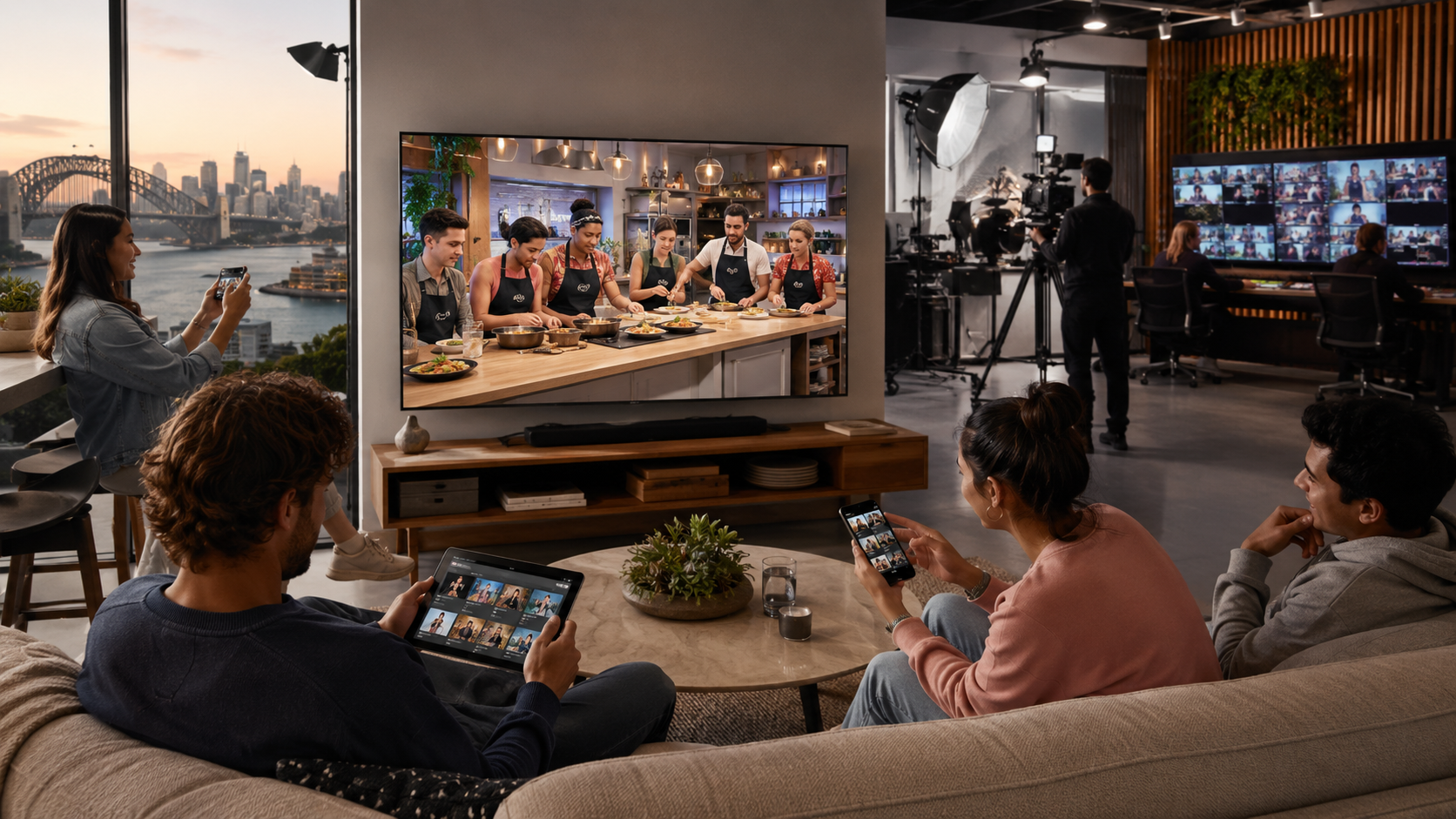
Australia’s television industry is undergoing a significant digital transformation as traditional broadcasters compete with global streaming platforms and rapidly changing audience preferences. The rise of online video consumption has reshaped how Australians discover, watch, and interact with entertainment content.
Television is no longer limited to scheduled programs delivered through traditional channels. Instead, the industry has developed into a connected ecosystem involving broadcast networks, streaming platforms, social media channels, and digital content creators.
This transformation represents one of the biggest changes in Australian media history, forcing companies to rethink production, distribution, and audience engagement strategies.
The Shift From Traditional Broadcasting to On-Demand Viewing
For decades, Australian television was dominated by major free-to-air networks such as ABC, Seven, Nine, and Network 10. These broadcasters controlled programming schedules and audience access through linear television models.
However, consumer behavior has changed dramatically. Modern audiences increasingly expect flexibility, choosing when and where they watch content.
Streaming services including Netflix, Stan, Disney+, Prime Video, and Paramount+ have accelerated this shift by offering large content libraries available at any time.
The changing viewing pattern has encouraged Australian television companies to develop their own digital platforms. Services such as ABC iview, 7plus, 9Now, and 10 Play allow broadcasters to maintain relationships with viewers beyond traditional television.
Australian Content Finds New Opportunities Through Streaming
Digital platforms have created new possibilities for Australian storytelling. Local producers can now distribute content to wider audiences without depending entirely on traditional broadcast schedules.
Australian dramas, documentaries, reality programs, and entertainment formats have gained greater international visibility through streaming platforms. This expansion has increased demand for locally produced content and encouraged investment in Australian creative industries.
According to Screen Australia, the Australian screen sector continues to adapt to new distribution models as digital platforms influence production and audience access.
Reference:
https://www.screenaustralia.gov.au/fact-finders/industry-trends
The availability of online platforms has allowed Australian creators to experiment with different storytelling formats and reach niche audiences that may have been difficult to attract through conventional television.
Social Media Has Become Part of the Television Experience
The modern television experience extends far beyond the screen. Social media platforms have become essential tools for promoting programs, building communities, and maintaining viewer engagement.
Television networks now create additional digital content such as interviews, short clips, livestream discussions, and behind-the-scenes footage.
Reality programs benefit particularly from this approach because online discussions often become part of the entertainment itself. Viewers share reactions, debate contestants, and create viral moments that increase program visibility.
This integration between television and social media has changed marketing strategies. Networks no longer rely only on traditional advertising campaigns but also focus on digital communities and influencer-style engagement.
Challenges Facing Australia’s Digital Television Future
Although digital transformation provides opportunities, it also creates challenges for Australian broadcasters. Competition from international streaming companies has increased pressure on local networks to produce high-quality content while managing financial limitations.
Subscription fatigue is another emerging issue as audiences become selective about which streaming services they maintain. Companies must provide unique value to retain viewers in an increasingly crowded market.
Additionally, Australian producers must balance global entertainment trends with the need to preserve local cultural identity.
The Next Stage of Australian Television Innovation
The future of Australian television will depend on how effectively companies combine traditional broadcasting strengths with digital technology. Artificial intelligence, personalized recommendations, interactive features, and mobile-first content strategies are likely to influence future developments.
Australia’s television industry shows that broadcasting is not disappearing; instead, it is evolving into a more flexible and interconnected digital environment.
The success of future television platforms will depend on their ability to deliver meaningful local stories while adapting to the expectations of modern digital audiences.